A Modern Guide to Selecting Geometric Art for Bedroom Walls
Table of Content
Introduction to Geometric Art for Bedroom Walls
As a geometric abstract painter and architect, I have always knew that a bedroom should feel like a sanctuary – a place where stress melts away and restful sleep comes easily. The way a room is structured, balanced and visually composed has a direct impact on how we feel within it. When a bedroom lacks thoughtful detail, it can feel unfinished or impersonal. Geometric art for bedroom walls can transform your space into a true retreat. Carefully chosen geometric paintings and canvas art prints bring intention, harmony and character to the space. Personalized, high-quality pictures serve as central decorative elements, allowing you to showcase your individual personality and style through vibrant visuals and unique designs.
Geometric art is particularly well suited to bedrooms. Its clean lines, balanced compositions and considered use of colour create visual interest without overwhelming the senses. Unlike overly busy patterns or chaotic designs, geometric artwork introduces structure, harmony and a sense of order – qualities that naturally support relaxation and a peaceful atmosphere.
This guide is addressed to homeowners, interior designers and art collectors looking to enhance their bedroom with modern, calming geometric art. Choosing the right wall art can improve your mood, sleep quality, and overall bedroom atmosphere. In this article we explore how to choose geometric paintings and canvas prints that enhance your bedroom’s mood, complement your décor and reflect your personal style. Thoughtful design choices in colour schemes and shapes can lead to a harmonious result that truly expresses your unique taste and creates a cohesive interior theme. From bold abstract compositions to refined minimalist designs, you will discover how to transform your bedroom walls into a source of everyday comfort and understated elegance.
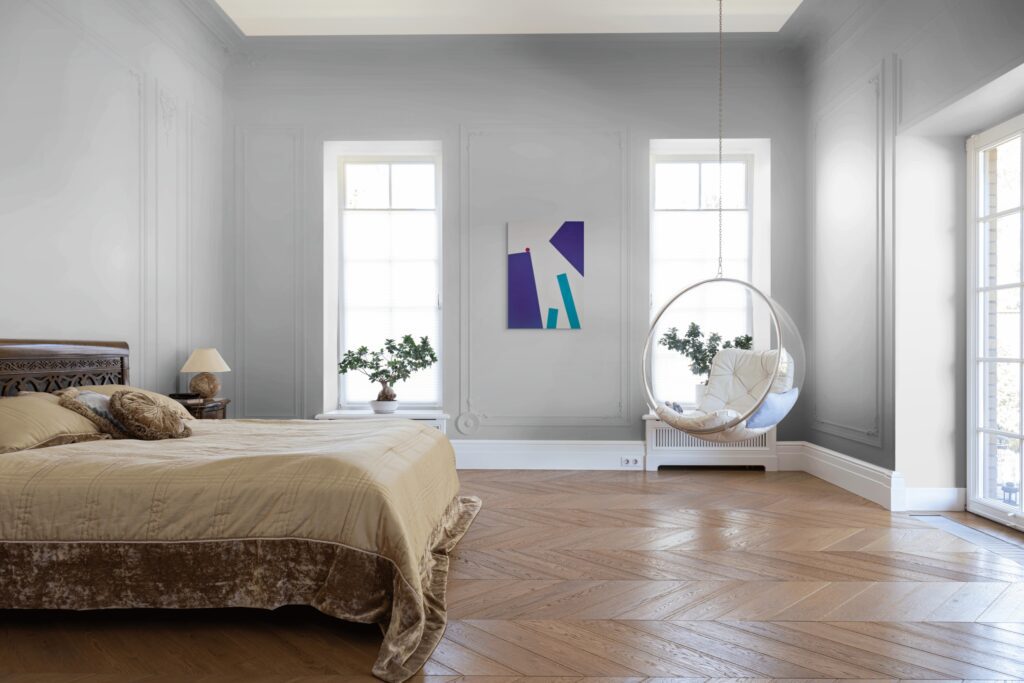
Why Bedroom Walls Need Calming Geometric Art
As both a painter and an architect, I am always aware that the bedroom is unlike any other space in the home. It is the first environment you encounter each morning and the last one you see before sleep. This daily, repeated exposure means that the artwork on your bedroom walls quietly shapes your mood, your sense of calm and even the quality of your rest. That is why geometric art patterns for children’s room wall painting are trendy – they are calming nervous system.
Research in environmental psychology suggests that visual surroundings influence how easily the body shifts into a relaxed state. In a bedroom, cluttered or overly intense imagery can subtly stimulate the mind when it should be unwinding. The nervous system responds positively to visual cues that suggest order, balance and safety – qualities that are essential in a space dedicated to rest.
Geometric art offers a natural solution. Structured compositions, balanced forms and harmonious colour palettes provide gentle visual rhythm without overwhelming the senses. The mind recognises symmetry and proportion instinctively. This quiet mathematical harmony can foster a sense of stability and ease. In a bedroom setting, this translates into artwork that feels both engaging and restful.
When selecting geometric canvas prints for a bedroom, I always consider emotional intention. Do you want to encourage slower mornings? Deeper rest? A more grounded atmosphere? Softer tones, considered spacing and restrained compositions help build a visual anchor – something steady and reassuring. In this way, geometric art becomes more than decoration – it becomes part of the architecture of calm.
Understanding why bedroom walls benefit from calming geometric art naturally leads to exploring the specific ways such artworks can enhance relaxation, balance, and visual harmony in your space.
Let’s take a look at the key benefits of geometric art for bedroom walls.
The Benefits of Geometric Art for Your Bedroom
Geometric art offers more than decoration – it can shape the mood, enhance relaxation, and bring visual harmony to your bedroom. By thoughtfully selecting geometric designs, you can turn your walls into a source of calm and personal expression.
- Promotes Calm and Restfulness – Structured shapes and balanced compositions reduce visual chaos, supporting better sleep.
- Adds Visual Interest Without Overstimulation – Repeating patterns engage the eye subtly, creating a focal point without overwhelming the senses.
- Supports Personal Style – From pure geometry to abstract hybrids, geometric art allows you to reflect your personality while maintaining a serene atmosphere. What’s really great, geometric shapes can be mastered by even the beginner home painter.
- Enhances Spatial Harmony – Properly scaled and placed pieces complement furniture and architectural elements, making the room feel cohesive.
- Flexible Materials and Formats – Originals on 3D canvases or high-quality prints provide durability and versatility for any bedroom wall.
By incorporating geometric art, your bedroom becomes more than a place to sleep – it transforms into a harmonious sanctuary that balances calm, beauty and personal expression.
With the benefits of geometric art in mind, the next step is choosing the colours that enhance calm, restfulness, and visual harmony in your bedroom.
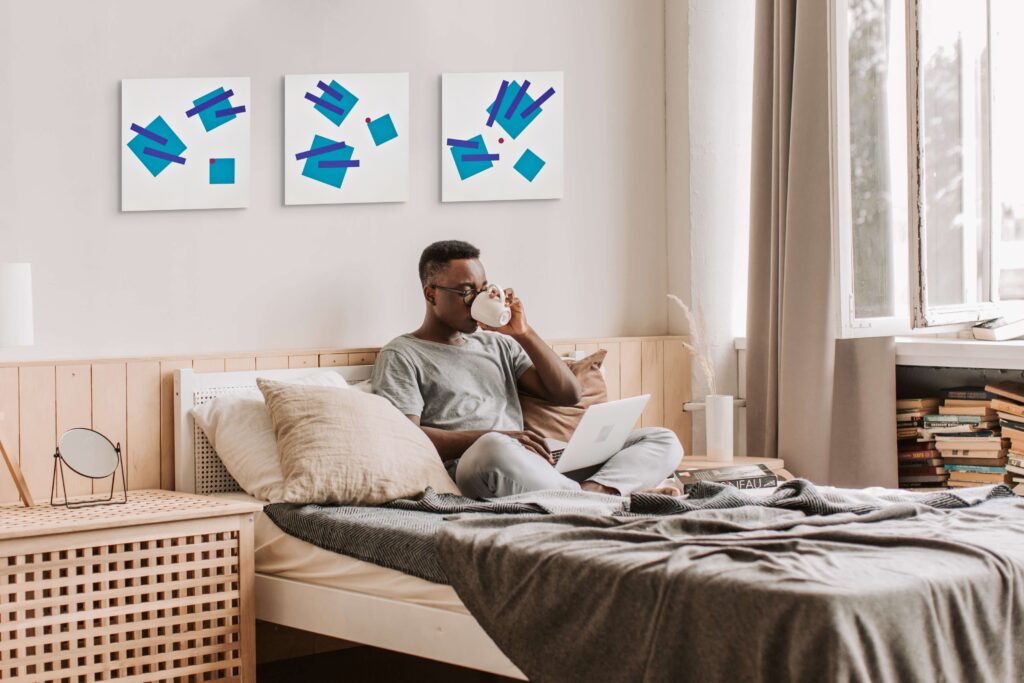
Best Colours for Abstract Wall Art in the Bedroom
Colour is a part of the emotional architecture of a bedroom. Colour influences mood, breathing patterns and even heart rate, particularly in spaces devoted to rest and intimacy. While personal preference and taste should never be ignored, certain tones consistently support cozy feeling, relaxation and better sleep when used in geometric paintings and canvas art prints.
#1 Cool Blues and Greens
Blue is widely regarded as one of the most restful colours. It can help lower heart rate and encourage a sense of physical calm, making it especially suited to bedroom walls. Deep navy, cerulean and soft teal tones work beautifully in geometric compositions, offering both visual depth and tranquillity.
Green carries similarly restorative qualities. Reminiscent of nature, it introduces balance and freshness without overstimulation. In geometric art, muted sage, olive or eucalyptus shades create grounded focal points while maintaining a serene atmosphere. These tones feel stable rather than dramatic – ideal for a space designed for unwinding.
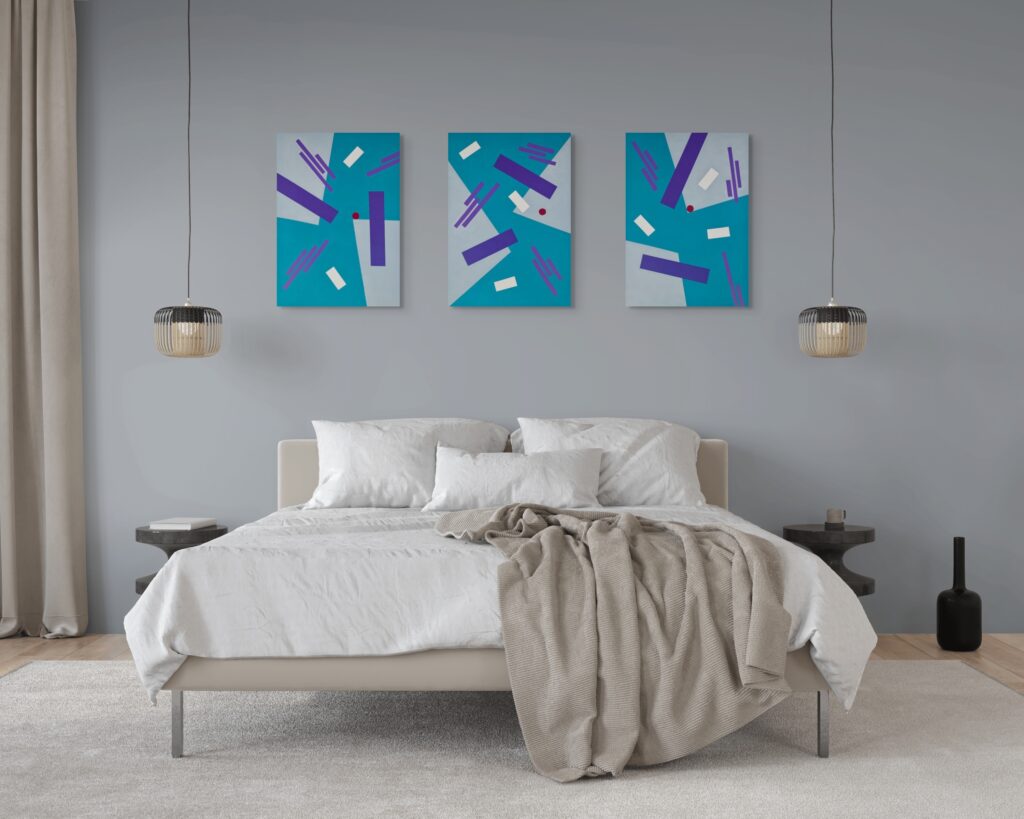
Explore Adra’s Joy of Closeness triptych – a minimalistic, geometric design that fosters calm, connection and a beautifully balanced bedroom atmosphere.
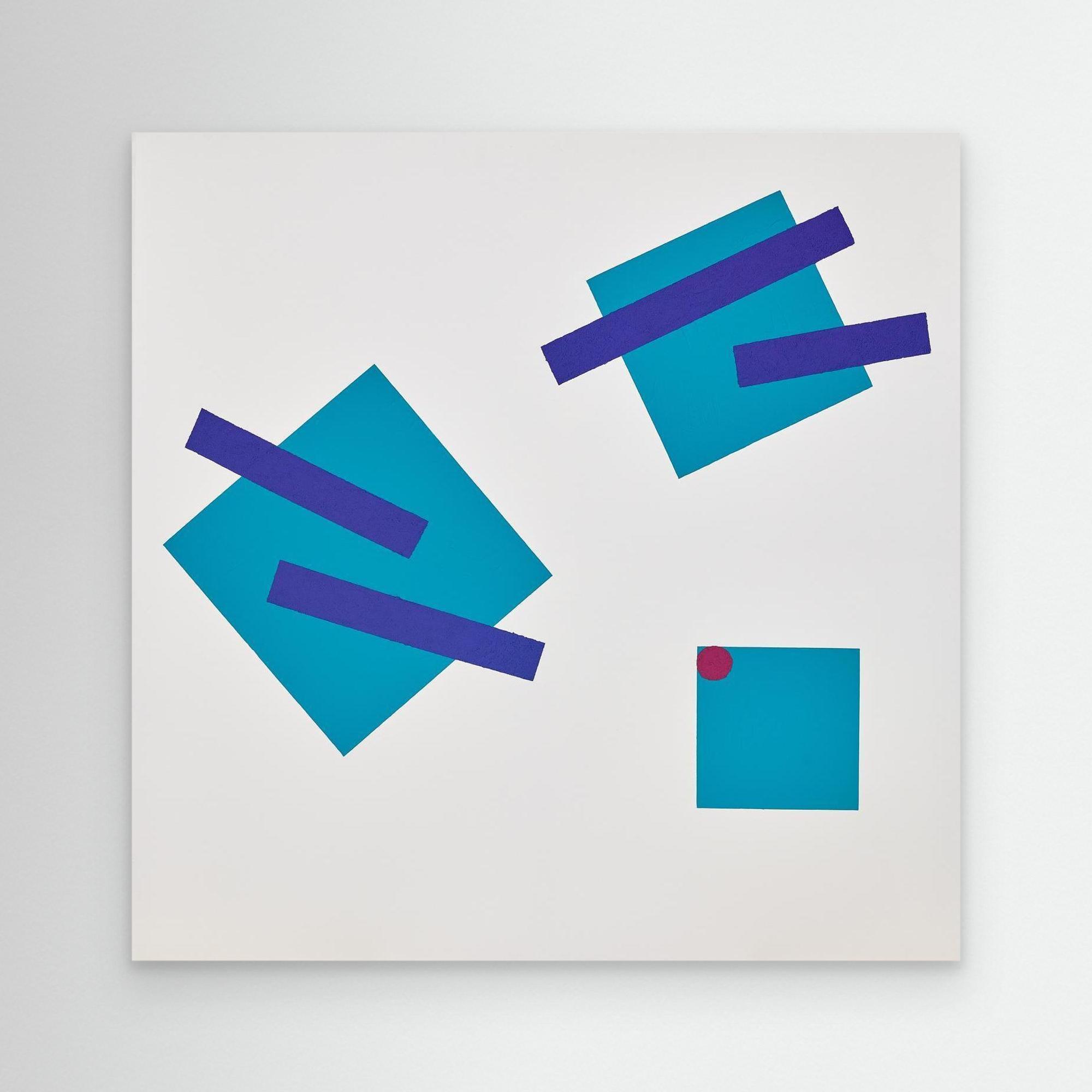
Joy of Closeness: Quiet Embrace
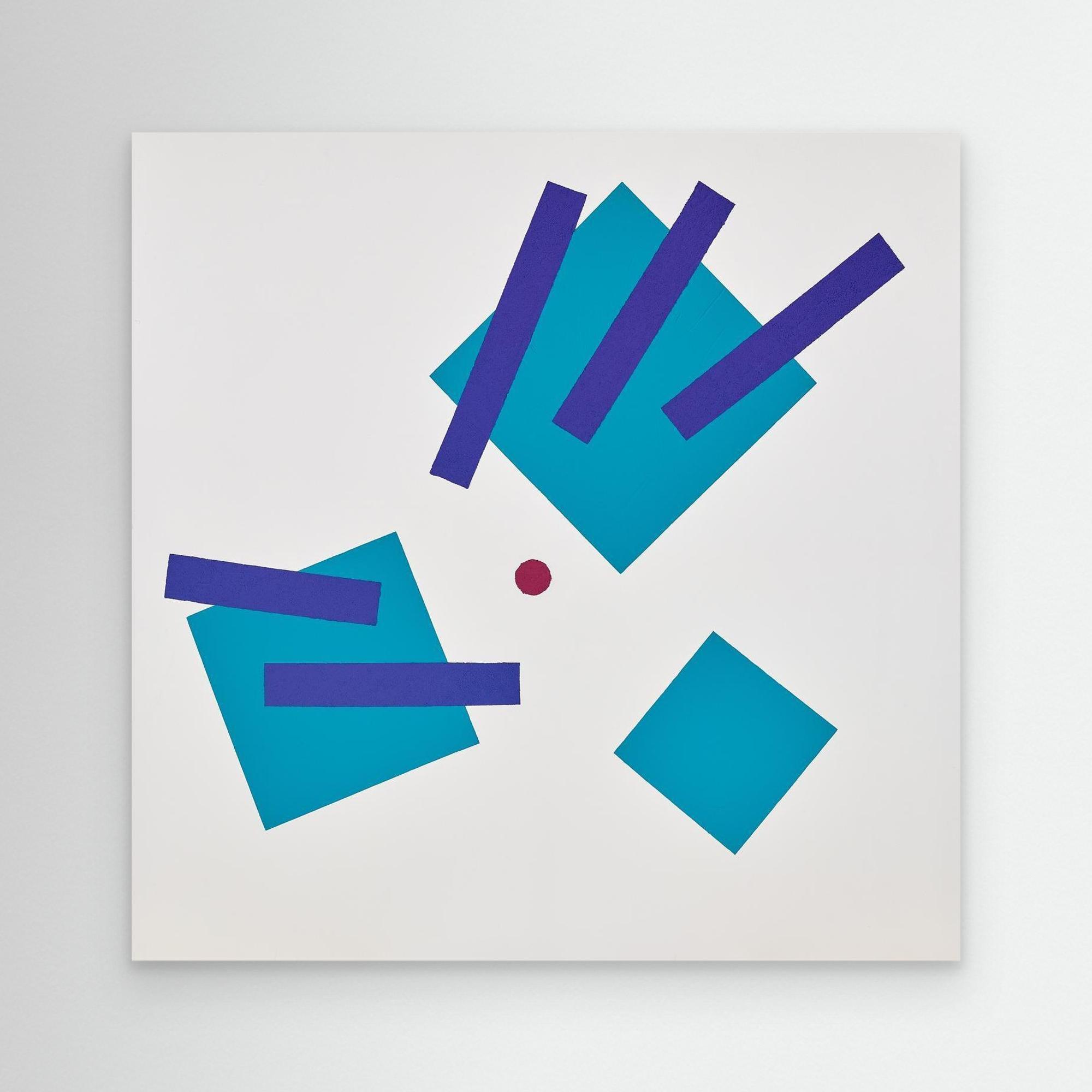
Joy of Closeness: Magnetic Drift
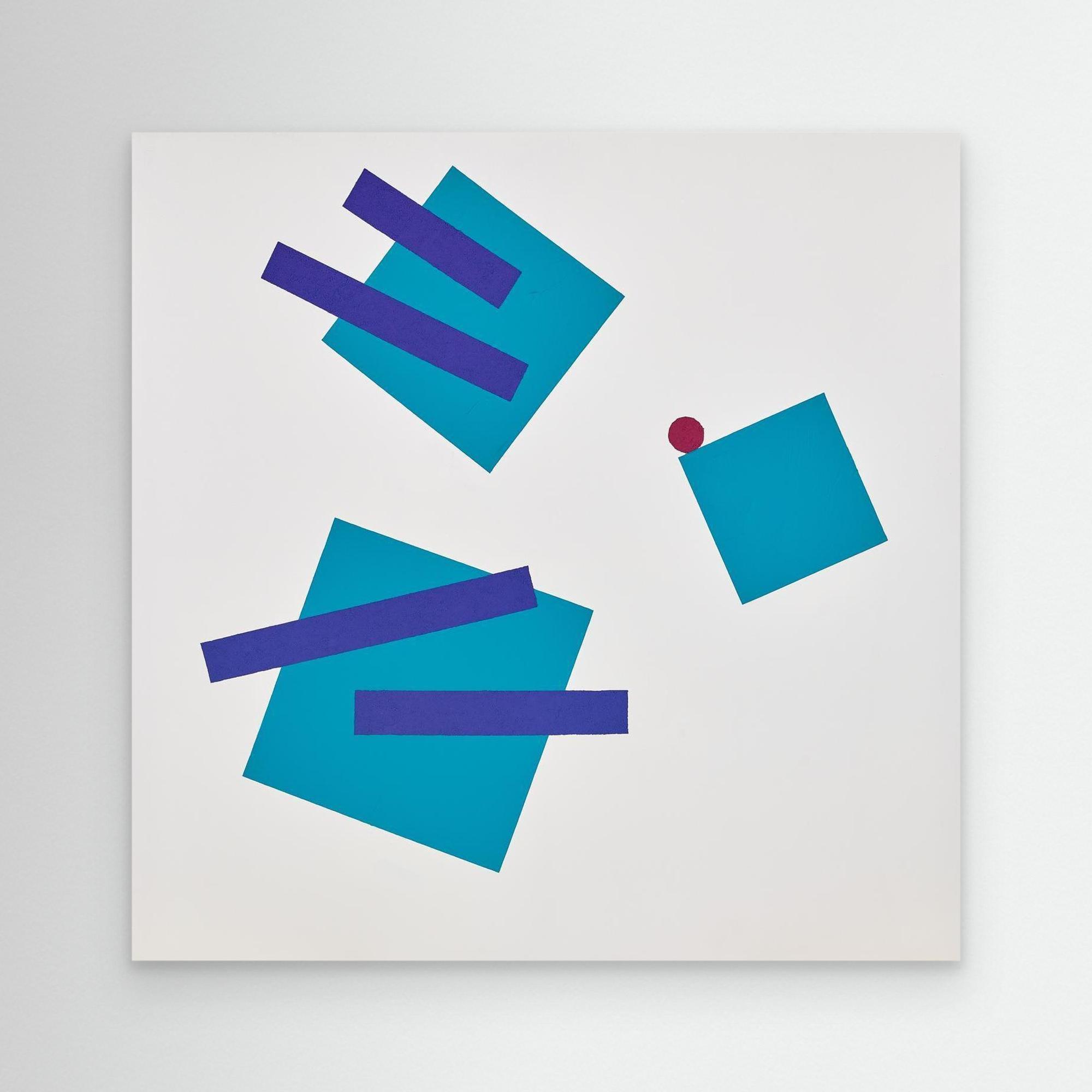
Joy of Closeness: Fluid Intimacy
#2 Black, and Grey White
Black and white geometric art offers clarity and touch of timeless elegance. The contrast provides structure, while the simplicity prevents visual overload. In a bedroom, this can create a calm, architectural presence – particularly when compositions rely on proportion, spacing and rhythm rather than colourful statement contrast. Black and white works particularly well in minimalist bedrooms where calm comes from order and restraint.
💡 Tip: Two-tone designs provide versatile backdrops for geometric art while allowing other bedroom decor elements to harmonise with the palette.
Grey has become a defining presence in contemporary bedroom design, and with great reason. Psychologically neutral, it is neither stimulating nor heavy, which makes it an excellent foundation for a restful environment. In geometric wall art, grey introduces structure, depth and quiet definition. It easy allows form and proportion to take centre stage, while softer accent tones can emerge gently without overwhelming the space.
#3 Soft Green and Subtle Bohemian Tones
Soft, earthy tones, such as sage, muted terracotta, dusty rose or warm sand bring to life gentle warmth to bedroom walls. These colours add personality while remaining soothing when balanced within geometric compositions.
Green boho-inspired geometric pieces work beautifully within these palettes, providing subtle visual interest without disturbing the calm. Paired with minimalist or lightly coloured canvas art, they create a balanced, layered look that feels both personal and restful.
#4 Delicate Purples
Delicate purples like lavender, lilac or dusty plum bring calm sophistication to a bedroom when used sparingly with neutral tones. Associated with creativity and understated luxury, purple feels intentional and personal. Subtle use in geometric art adds depth and elegance without overstimulating the space. Using vibrant colours can create a calming and stylish environment in a child’s room.
💡 Tip: Let your child have a say in choosing the colours and shapes to create a unique result.
#5 Colours to Avoid in Bedroom Paintings
Highly saturated reds, electric oranges and neon yellows tend to stimulate rather than relax. Such high-energy tones can raise alertness levels, the opposite of what we want in a bedroom.
Very dark, heavy colour blocks may also feel oppressive if not carefully balanced with lighter elements. If you are naturally drawn to warmer colours, choose softened, muted variations and use them as small accents within an otherwise calm palette.
Choosing the right colours for geometric or abstract wall art is essential for creating a bedroom that feels calm, balanced, and visually appealing. In my own geometric compositions, I often include a restrained warm detail, just enough to create quiet tension and visual interest, without disturbing the overall sense of harmony. In a bedroom, balance is everything.
The table below highlights the most effective palettes, their benefits, and practical tips for use.
Colour Palette | Effect and Benefits | Usage Tips | Cool blues and greens | Promotes calm, lowers heart rate | Mix shades for depth; pairs well with natural textures |
|---|---|---|
Black, white and grey | Timeless, structured, neutral | Use contrast or layered greys; ideal for minimalist spaces |
Soft green and boho tones | Gentle warmth, restorative | Sage, dusty rose, muted terracotta; layer with soft textiles |
Soft purples | Calm sophistication, creativity | Lavender, lilac, dusty plum; use sparingly with neutrals |
Colours to avoid | Highly stimulating or oppressive | Bright red, neon yellow, deep dark blocks; use muted accents |
By selecting soothing tones like blues, greens, soft purples, or muted boho shades and avoiding overly bright or heavy colours, you can enhance relaxation, support restful sleep, and create a harmonious backdrop for your geometric artwork. Two-tone or layered palettes add depth and versatility, making it easy to integrate your art with the rest of the room.
After selecting the colours that promote calm and harmony, it’s important to consider the size and placement of your original paintings or canvas prints to make the most of your bedroom walls.
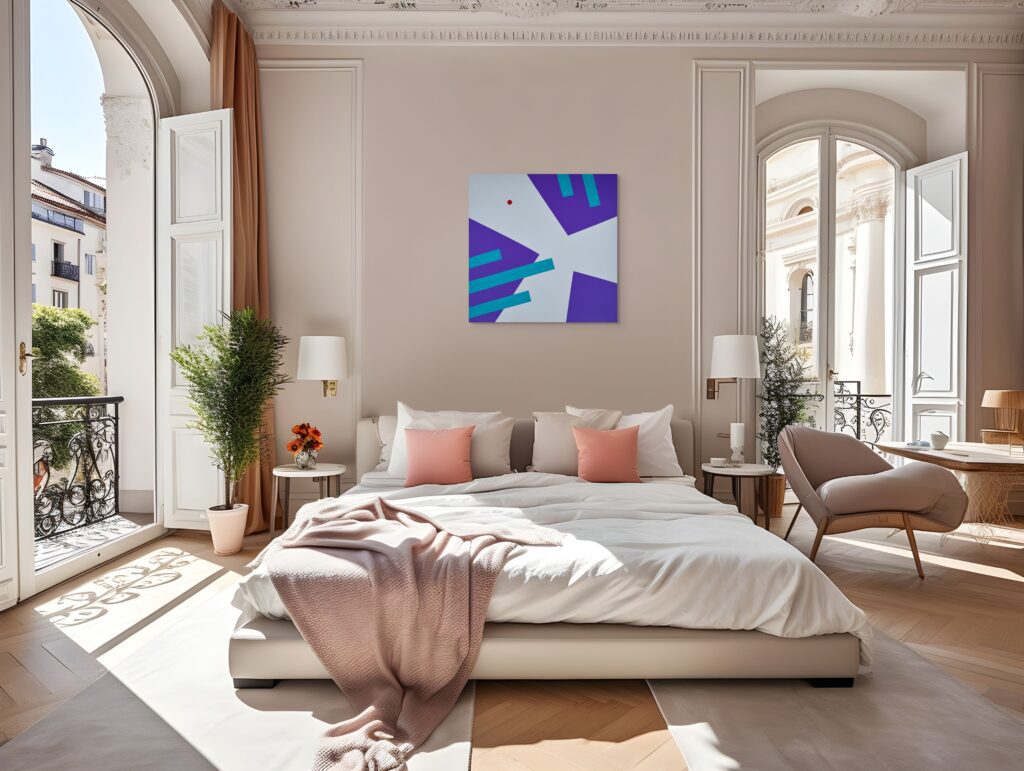
Original Paintings and Canvas Prints: Sizes and Placement for Bedroom
Artwork in the bedroom requires different considerations than other spaces. Walls are often closer to the viewer, furniture arrangements can be more constrained, and the overall space is smaller than a typical living room. Choosing the right size and positioning ensures your art feels balanced and enhances the restful atmosphere of the room.
#1 Above the Bed
The wall behind your headboard is prime spot for artwork. For a standard queen bed (approximately 60 inches / 152 cm wide), choose pieces around 36–48 inches (91–122 cm) wide, following the two-thirds rule – the artwork should span roughly two-thirds of the furniture width. For a king bed (76 inches / 193 cm), 48–60 inches (122–152 cm) works well.
Hang the art 6–8 inches (15–20 cm) above the headboard. If you do not have a headboard, position the centre at 56–60 inches (142–152 cm) from the floor (standard eye level). This ensures comfortable viewing from a standing position and keeps the artwork visually connected to the bed.
Three-panel arrangements, such as a set of three wooden-framed canvases, are particularly effective above beds. A triptych in abstract geometric or boho-inspired designs mirrors the horizontal expanse of the mattress and adds more visual interest than a single canvas.
#2 Opposite the Bed
The wall opposite the bed is often overlooked, yet it is the most frequently viewed while waking and before sleep. This makes it ideal for larger statement pieces.
Since the artwork will often be viewed from a reclining position, hang it slightly lower than standard eye level, with the centre around 48–54 inches (122–137 cm) from the floor. This prevents neck strain and keeps the piece comfortably in sight from the bed. Abstract or minimalist geometric designs work especially well in this location, creating visual engagement without disrupting the calming bedroom environment.
#3 Side Walls
Narrow walls or corner spaces beside the bed are perfect for vertical artwork or smaller geometric pieces. Placing matching prints on both sides of the bed can establish visual rhythm and symmetry, enhancing the sense of balance in the room.
For these areas, smaller pieces, such as 12×16 inches (30×41 cm) work best. Choose subtle geometric designs or minimalist prints that complement your main artwork while maintaining a restful aesthetic. Side-wall arrangements help frame the bed and create a cohesive flow without overwhelming the space.
#4 Coordinated Multi-Room Arrangements: Bedrooms, Living Rooms, Hallways and More
In bedrooms with open-plan connections to adjoining hallways or en-suite spaces, coordinating artwork across multiple walls can create continuity and flow. Consider repeating colours, shapes or themes in pieces ranging from 40×40 cm to larger 24×36 inches (61×91 cm) canvases.
The table below provides a quick reference for planning geometric artwork placement in bedrooms while keeping focus on scale, viewing height, and style harmony.
Location | Recommended Artwork Size | Height and Placement | Tips / Style Suggestions | Above the bed | Queen 36–48 in (91–122 cm), King 48–60 in (122–152 cm) | 6–8 in (15–20 cm) above headboard, without headboard, centre 56–60 in (142–152 cm) from floor | Triptychs or three-panel sets mirror mattress width; choose abstract geometric or boho designs |
|---|---|---|---|
Opposite the bed | Larger statement pieces | Centre 48–54 in (122–137 cm) from floor | Ideal for viewing from lying down; abstract or minimalist geometric designs engage without overstimulating |
Side walls | Smaller vertical pieces, e.g., 12×16 in (30×41 cm) | Align centres symmetrically if pairing both sides | Subtle geometric or minimalist prints complement main artwork and create visual rhythm |
Coordinated multi-wall arrangements | 24×36 in (61×91 cm) up to 40×40 cm | Varies by wall, repeat visual themes | Repeat colours, shapes or patterns to unify open-plan areas while preserving calm and balance |
This approach unites the bedroom with adjacent areas while keeping the focus on calm, cohesive paintings. By thoughtfully extending your geometric art across the space, you maintain a sense of balance and intentionality throughout the room.
Once you’ve considered the ideal sizes and placement for your bedroom walls, the next step is to explore the different styles of geometric and abstract art, so you can choose pieces that reflect your personal aesthetic and create the desired atmosphere.
Geometric vs Abstract Art for Bedroom Home Decor
Both geometric and abstract art fall under the contemporary umbrella, yet they create distinctly different effects in a bedroom. Understanding these differences helps you select artwork that complements your personal style while supporting relaxation and restful sleep.
#1 Pure Geometric Wall Art
Pure geometric art relies on precise shapes like circles, triangles, squares and rectangles arranged with mathematical precision. This style appeals to those who find comfort in order and symmetry. Predictable patterns inspired by shells, pebbles and other natural elements, are showcased in monochrome or minimal colour palettes to provide a sense of control and calm. It delivers unique results in bedrooms, helping to soothe a busy or anxious mind.
Geometric pieces work very well in minimalist settings, where clean lines and uncluttered spaces dominate. Structured compositions in geometric canvas prints echo architectural elements, creating visual harmony between the artwork and the room itself.
#2 Organic Geometric Wall Art
Organic geometric art blends structured shapes with softer, flowing forms. Shapes may overlap, interact or curve, producing a hand-crafted, natural quality that adds warmth and personality. Curved shapes are perfect for fostering creative play and stimulating the imagination of children. Playing with different shapes can soften dark tones and add structure to the overall design.
This approach strikes a balance between order and variation. It provides enough visual structure to feel grounded while allowing subtle surprises that prevent monotony. Organic geometric canvases are particularly effective in bedrooms where you want calmness without rigidity.
#3 Abstract Geometric Wall Art
Some abstract artwork incorporates geometric shapes as compositional anchors without being strictly geometric. For example, a fluid, painterly background may be layered with crisp circles or angular forms.
This hybrid style offers the emotional expressiveness of abstract art while retaining the stabilising presence of geometry. In bedrooms, abstract-geometric pieces bring character and visual interest without compromising serenity, making them ideal for spaces that need both calm and personality.
#4 Mid-Century Modern
Mid-century modern art introduces timeless elegance through clean lines, balanced forms and organic shapes. Geometric compositions inspired by Bauhaus or mid-century aesthetics combine structure with subtle playfulness.
Triptychs or three-panel arrangements work particularly well above beds, serving as focal points that unify the room’s décor. This style blends vintage charm with contemporary sensibilities, creating a bedroom atmosphere that is both stylish and restful.
Once you understand the differences between geometric and abstract art, it’s easier to apply practical tips for displaying these pieces effectively in your bedroom in next paragraph.
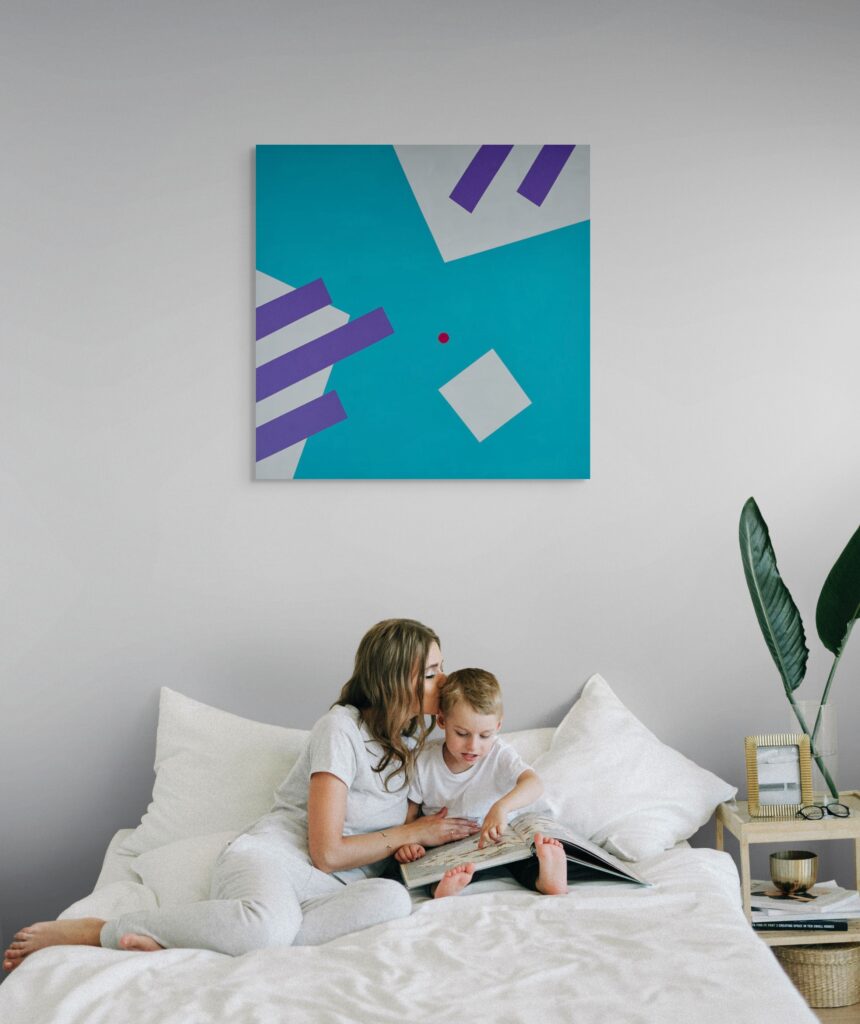
Practical Tips for Displaying Geometric Art in Bedrooms
This table offers practical tips for selecting and displaying geometric art in bedrooms. It highlights considerations beyond colour and style, including scale, lighting, texture and arrangement, helping you create a balanced, calming and visually engaging space.
Aspect | Tip for Bedrooms | Effect on Mood and Atmosphere | Wall colour pairing | Choose soft neutrals or muted tones for backgrounds; allow geometric art to stand out. | Enhances calm and makes artwork a focal point without overstimulation. |
|---|---|---|
Lighting | Use adjustable bedside or overhead lighting to highlight geometric pieces. Avoid harsh glare. | Soft lighting accentuates texture and depth, creating a cosy, relaxing ambience. |
Scale and proportion | Match artwork size to wall space: large triptychs for above beds, smaller panels for side walls. | Ensures visual harmony and prevents the room from feeling crowded or empty. |
Texture and finish | Opt for gallery-wrapped 3D canvases or textured prints rather than flat posters. | Adds depth and tactile interest, making the bedroom feel curated and personal. |
Orientation | Horizontal pieces work well above beds; vertical panels suit narrow side walls or corners. | Guides eye movement, creating balance and a sense of order in the space. |
Symmetry vs asymmetry | Symmetrical arrangements promote calm; asymmetrical layouts introduce subtle visual energy. | Allows control over bedroom atmosphere, from serene to slightly dynamic, depending on preference. |
Accent details | Incorporate subtle colour pops or repeated motifs (like a small red dot). | Introduces personality without disturbing restful atmosphere. |
Rotation and change | Occasionally rotate or replace prints to refresh the bedroom without major redesigns. | Keeps the space feeling inspired and personalised over time. |
By paying attention to wall pairing, orientation, lighting and subtle details, you can enhance both the aesthetic and the atmosphere of your bedroom. These strategies ensure your geometric artwork contributes to a restful, personalised sanctuary rather than simply filling empty walls.
With these practical display tips in mind, you can explore Adra’s collection of canvas wall art to find pieces that perfectly complement your bedroom’s style and layout.
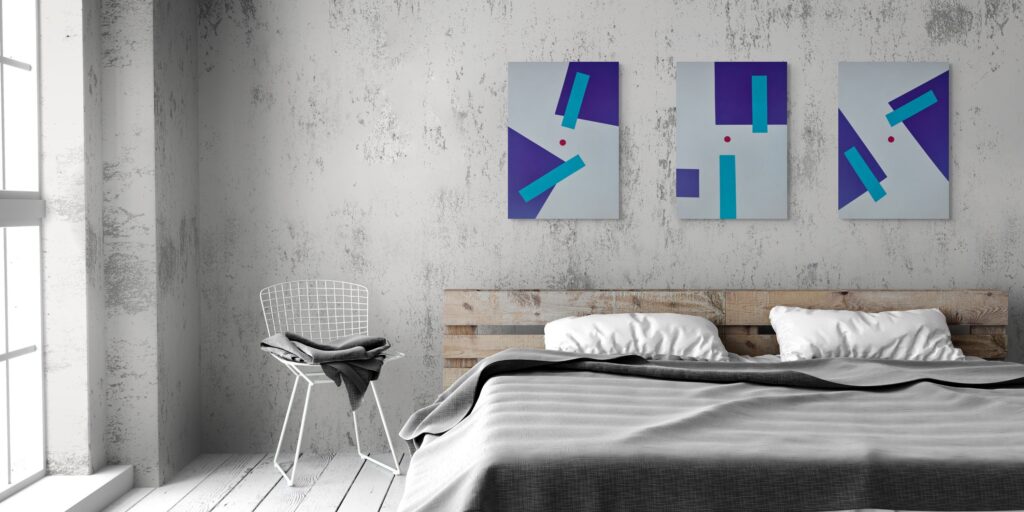
Adra’s Collection of Canvas Wall Art: Suitable for the Bedroom
Adra’s geometric paintings and prints are designed as visual affirmations. These are artworks that subtly influence mood and mindset through daily exposure. This makes them particularly suitable for bedrooms, where repeated viewing can enhance calm, relaxation and personal reflection. All original paintings are produced on gallery-wrapped cotton 3D canvases (380g/m2) with a matte varnished finish, ready to hang, combining aesthetic appeal with practical convenience. A portion of each sale goes towards funding individual artists.
Her signature approach blends textured, geometric forms with rich, mood-enhancing colours, creating compositions that are visually engaging without being overwhelming. The recurring red dot – Adra’s symbol of individuality within the surrounding world – provides a grounding element in each piece, offering subtle balance and psychological calm.
#1 Triptych Collections: Large-Scale Canvas Prints and Wall Art Sets
Adra’s geometric artworks are available both as original hand‑painted paintings and as museum‑quality canvas prints, giving you flexibility to choose pieces that best suit your bedroom’s scale and style. Originals are one‑of‑a‑kind, expressive works created with layered acrylic on cotton canvas, each hand‑stretched and ready to hang, while canvas prints offer gallery‑scale impact with vibrant colours and sturdy wooden stretchers, also ready to hang straight out of the box.
Within these formats, the six series of Invisible Geometry Collection, can be grouped in triptych or coordinated sets to create striking visual statements above a bed or on a feature wall:
- Interplay Triptych – These three panels (Exploring, Calling, Becoming) reflect the dynamic dialogue between self and others. The series expresses curiosity, connection and personal growth through energetic geometric forms.
- Balance Triptych – A series that embodies equilibrium and visual harmony. The panels are composed to create a sense of stability and measured rhythm, emphasising poised geometry and nuanced colour relationships.
- Gravity Triptych – Comprising Uplifting, Pulling and Propelling, this set explores forces of movement and tension. Each panel reflects directional energy and balanced contrasts that evoke momentum and grounding at once.
- Sensations Triptych – Featuring Sparks, Pulses and Echoes, this grouping plays with textured forms and layered colour to create visual resonance. The panels build a sense of rhythmic motion and tactile engagement.
- Playtime Triptych – Composed of Energetic, Bouncy and Adventure, this series celebrates joy, curiosity and spontaneity. Its geometric language conveys movement, resilience and the playful side of exploration.
- Joy of Closeness Triptych – Including Magnetic Drift, Fluid Intimacy and Quiet Embrace, this series focuses on themes of presence, connection and mutual belonging. The geometry carries a gentle emotional narrative about empathy and relational openness.
Each triptych acts as a cohesive narrative in three parts, offering layered meaning alongside striking visual rhythm. Whether chosen as originals or reproduced as canvas prints, they invite both contemplation and engagement, serving as visual affirmations that resonate beyond simple decoration. These sets are ideal for creating cohesive compositions that enhance the serenity and personality of a bedroom. Originals add depth and craft of textures, while canvas prints deliver intense colour and durability that suit everyday viewing.
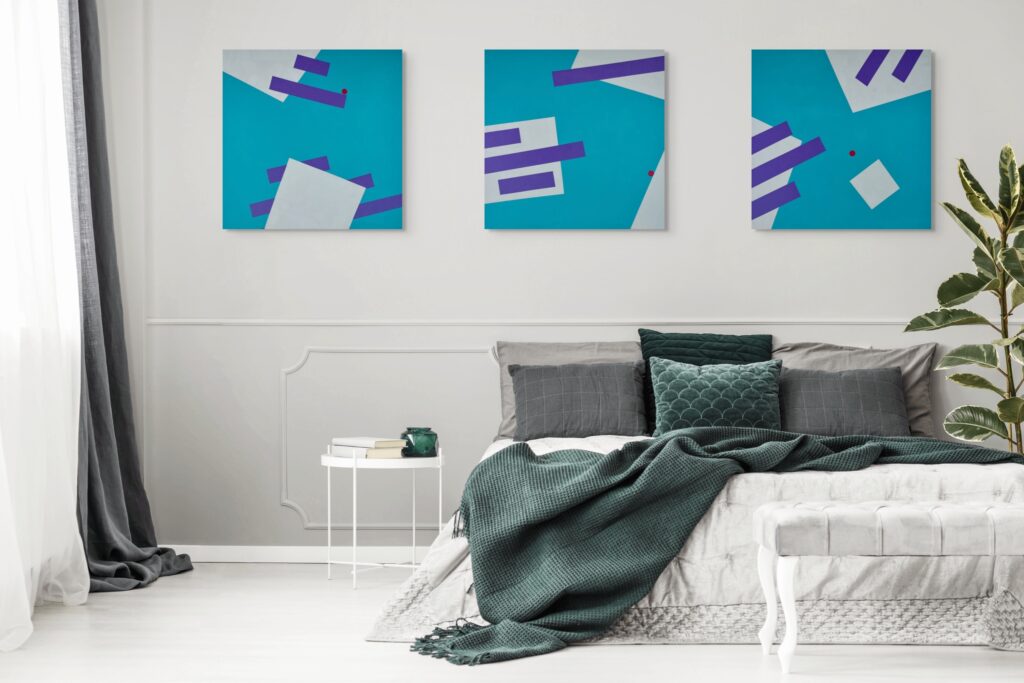
#2 Single-Panel Options: Large-Scale Geometric Paintings and Canvas Art Prints
For smaller bedrooms or walls with limited space, single-panel canvases from the Invisible Geometry collection offer the same visual impact as triptychs in a more compact format. Carefully layered geometric patterns create depth and interest, making them perfect for bedrooms that need statement pieces without overwhelming the space.
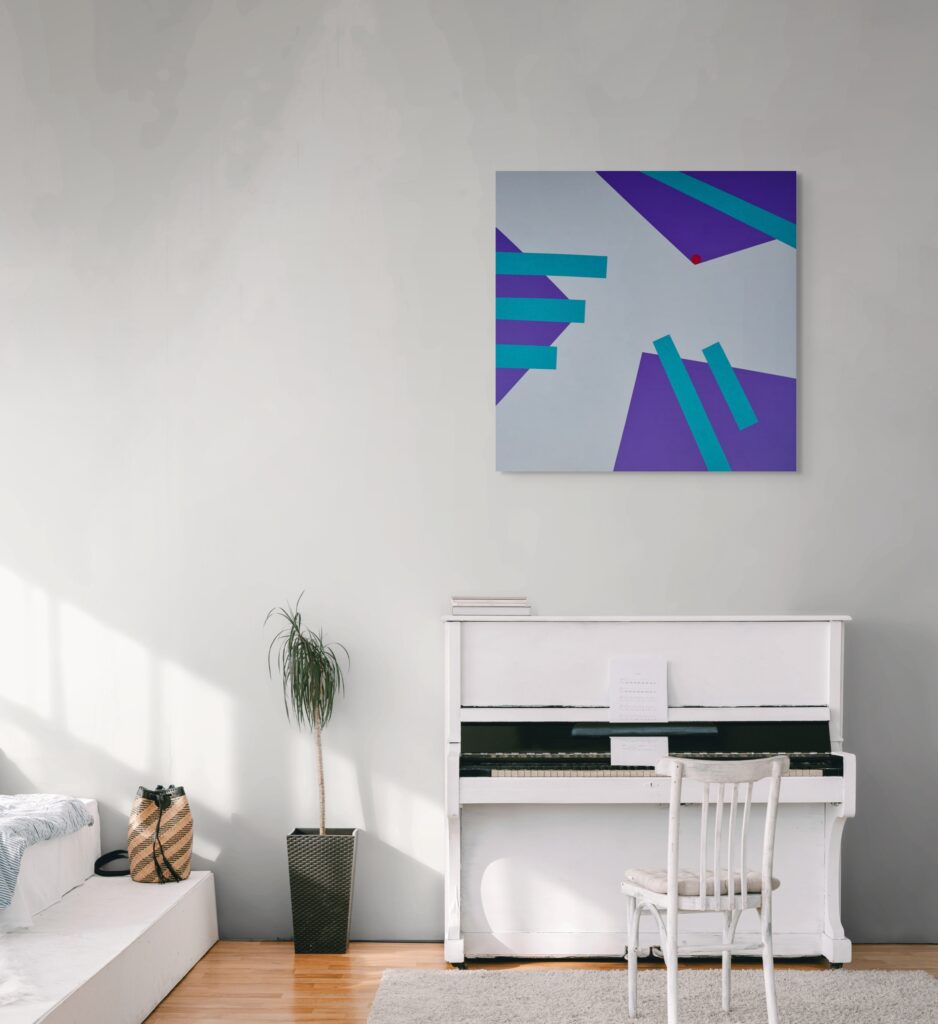
#3 Customisation and Quality: Large-Scale Geometric Paintings and Canvas Art Prints
All Adra paintings are available as high-quality works in multiple sizes to suit any bedroom wall. Gallery-wrapped 3D canvases arrive ready to hang, eliminating the need for framing and providing a clean, contemporary aesthetic.
Premium archival materials ensure that the artwork remains vibrant over time. These are not posters prone to fading or yellowing, but durable geometric paintings and canvas prints designed for daily viewing and long-term enjoyment.
There are two options available:
Originals
- Premium cotton 3D canvas (380 g/m²) with a matte varnished finish, available in 100 × 70 × 5 cm or 120 × 120 × 5 cm.
- Vibrant, long-lasting colours with UV protection to maintain brilliance.
- Each original painting is hand-stretched on a solid 5 cm deep pinewood frame.
- The edges are painted, allowing the piece to be displayed without an additional frame.
- A portion of every sale supports individual artists.
Canvas Prints
High-quality materials are used in the production of customizable geometric wall art prints for durability and visual appeal.
- Poly-cotton blend canvas with a matte or satin finish, resistant to scratches, cracking and warping.
- Vibrant, long-lasting colours printed with water-based HP Latex inks and UV protection.
- Canvas is stretched on a solid 3.2 cm deep wooden frame sourced from renewable materials.
- Available in a variety of sizes, with or without frames, to suit your bedroom’s dimensions and style.
After exploring Adra’s curated collection of canvas wall art, it’s clear how the right geometric pieces can complete your bedroom’s sanctuary, leading naturally to our final thoughts on creating a restful space.
🖼️Quiz: Selecting Geometric Art for Bedroom
Test your knowledge of choosing the right abstract and geometric artworks to create a calm, stylish and restful bedroom.
Question 1 of 3
What is the ideal width for artwork above a queen bed?
Which colour palette is most suitable for promoting sleep in the bedroom?
What is a recommended way to display multiple pieces in a small bedroom?
Final Thoughts: Geometric Art for a Restful Bedroom
In summary, selecting geometric art for bedroom walls is about more than decoration – it is a way to shape mood, enhance relaxation and reflect personal style. By considering colour, scale, composition and placement, you can create a bedroom that feels harmonious, balanced and inviting. Whether you choose pure geometric designs for their order and calm, organic geometric forms for warmth, abstract pieces with geometric elements for personality, or mid-century modern compositions for timeless sophistication, the right artwork transforms your bedroom into a restful sanctuary. With options ranging from single-panel prints to triptychs, originals on 3D canvases, or high-quality stretched canvas prints, there is a solution to suit every wall, every space, and every style.
Are You Ready to Add Depth and Style to Your Space with Textured Geometric Art?
Transform Your Space with Uplifting Art
Browse my collection of mood-boosting geometric paintings.
FAQ - Frequently Asked Questions

Unlocked. Congratulations!
Use code ADRA10 at checkout.
Only available the next 1 hour.
Your Discount for Mood-Boosting Art is Waiting
Enter your email to unlock your one-time discount.
By signing up, you’ll receive curated emails with early collection access and interior art styling tips. Unsubscribe anytime.