Geometric Art Trends in Modern Design: Insights for Collectors, Designers and Homeowners
Table of Content
Geometric art trends in modern design are influencing residential, commercial, and public spaces. This article explores current and emerging geometric art trends, their practical applications, and their impact on space, atmosphere, and emotion. It is aimed at interior designers, homeowners, and art collectors seeking to incorporate geometric abstraction thoughtfully into contemporary environments.
The Role of Geometric Art in Modern Interior Design Trends
Geometric art has long been the backbone of modern interiors, providing structure, rhythm, and visual focus to spaces that might otherwise feel undefined. It is an art form that strips away recognizable subjects to focus soley on shapes, lines, and space.
Architects use structured forms and clean lines in facades for visual interest, such as London’s Gherkin, which employs a geometric glass panel design to reduce heat absorption. Inside, geometric patterns appear in hexagonal tiles, abstract wall art, textiles, and rugs, instantly refreshing interiors. Geometric patterns in home decor are characterized by geometric shapes that repeat themselves, such as circles, squares and triangles.
Current geometric trends blend different styles like bold minimalism, simple forms conveying elegance with maximalist geometry, featuring layered shapes, vibrant colours, and 3D elements. This fusion responds to a growing desire for visual logic and calm amid modern chaos, ensuring that geometric abstraction remains a defining feature of contemporary design.
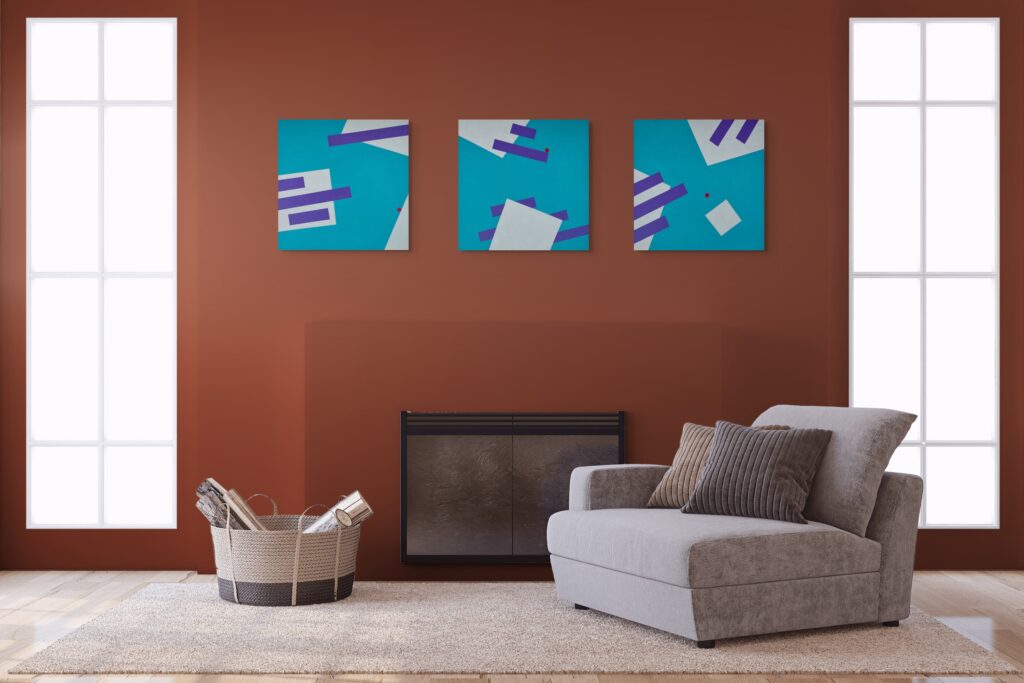
#1 The Evolution of Modern Geometric Art Styles in Design: From Bauhaus and Mid-Century to Contemporary Minimalism
The history of geometric wall art dates back over 6,000 years, with its earliest designs found in Neolithic sites. It has evolved over millennia, with 20th-century movements shaping the different styles we see today. Bauhaus pioneers like dutch artist Piet Mondrian distilled forms to grids and primary colours, emphasizing philosophy over decoration, while russian artist Kazimir Malevich’s “Black Square” demonstrated that simple shapes could convey profound meaning.
Mid-century modern design integrated geometric motifs into furniture, textiles’ geometric prints, and architecture’s intricate designs, making geometry central to functional spaces. Even sacred geometry now appears in modern interiors, offering symbolic depth for some and purely aesthetic appeal for others.
#2 Why Geometric Designs Continues to Define Contemporary Spaces and Interior Design
The appeal of geometric designs lies in their mathematical harmony. Principles like the golden ratio and Fibonacci sequences echo patterns in nature – nautilus shells, pinecones, branching structures – engaging both the mind and emotions.
In interior design, geometric patterns:
- Organize space with repeating geometric shapes, clean lines and grids
- Guide the eye along intentional pathways
- Add depth and dimension to flat surfaces by creating optical illusions and adjusting 3D features
- Provide a framework for layering elements without clutter
- Offer enduring visual appeal that transcends trends
Used in accents like cushions, rugs, or wall art, geometric abstraction enhances a space without competing with function, complementing architecture and creating balanced, harmonious interiors.
Discover contemporary geometric paintings that aligns with current design trends and enhances professional environments. Pieces such as The Interplay Triptych by Adra demonstrate how layered, three-dimensional geometry can create impact and authority while maintaining balance within commercial and residential modern spaces.
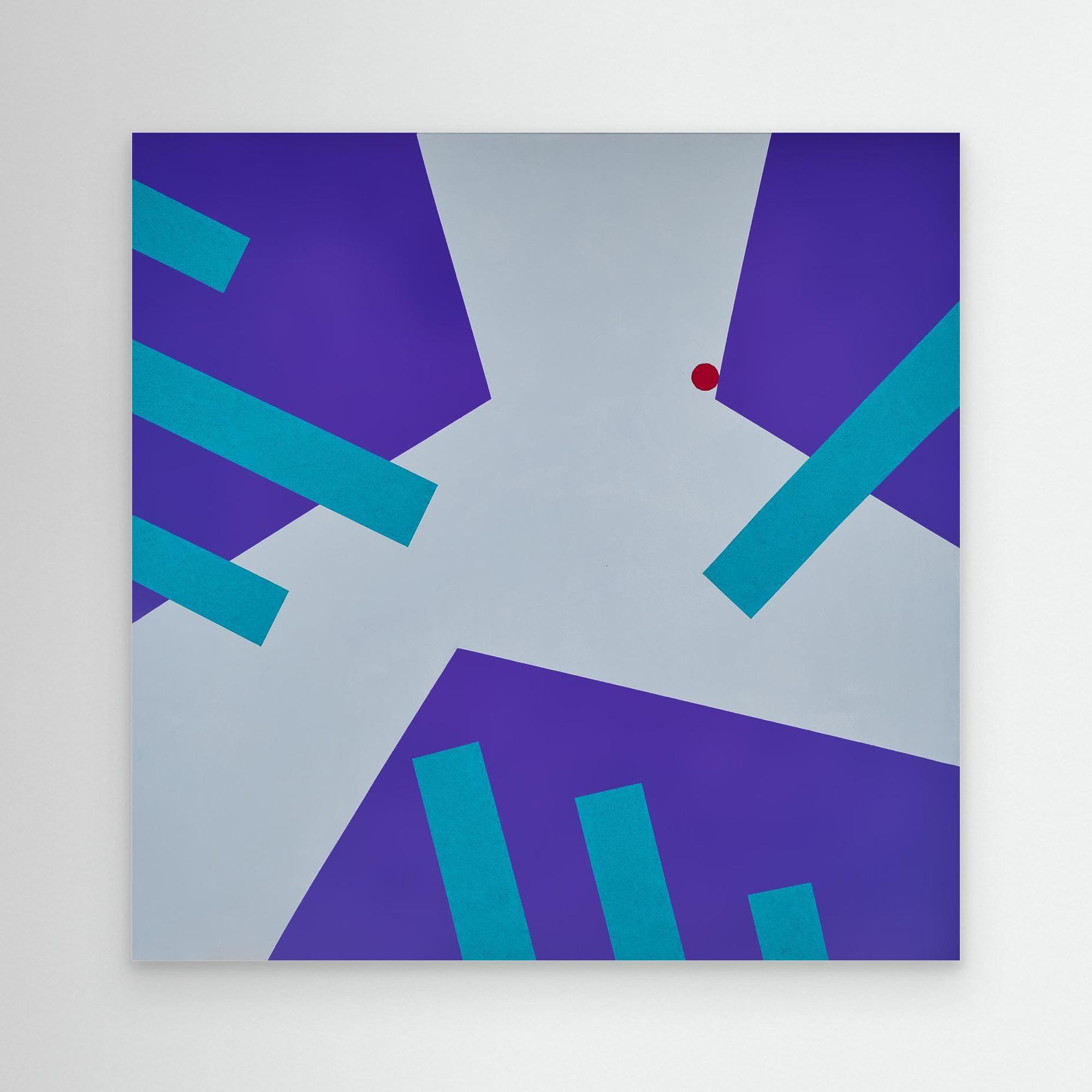
Interplay: Exploring
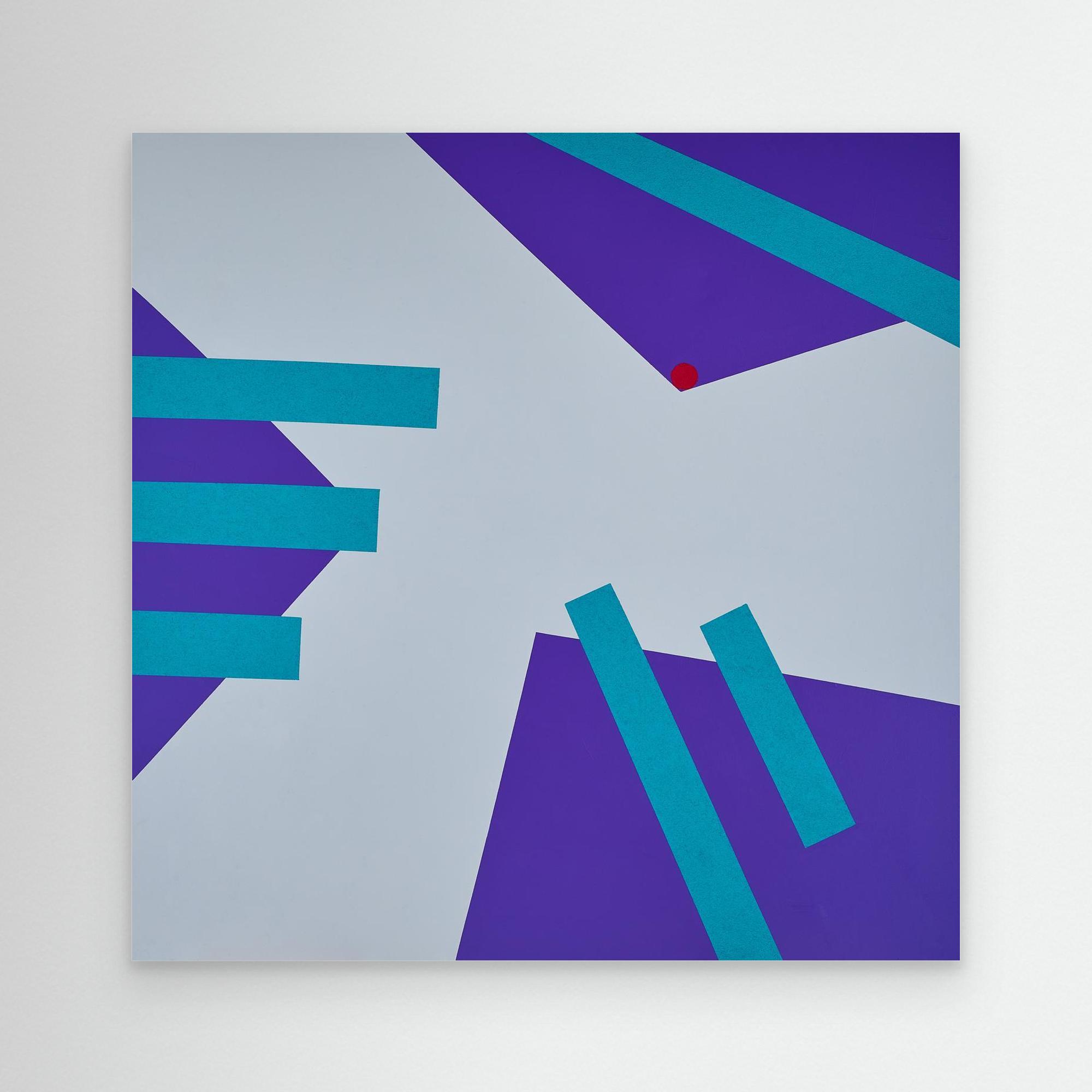
Interplay: Calling
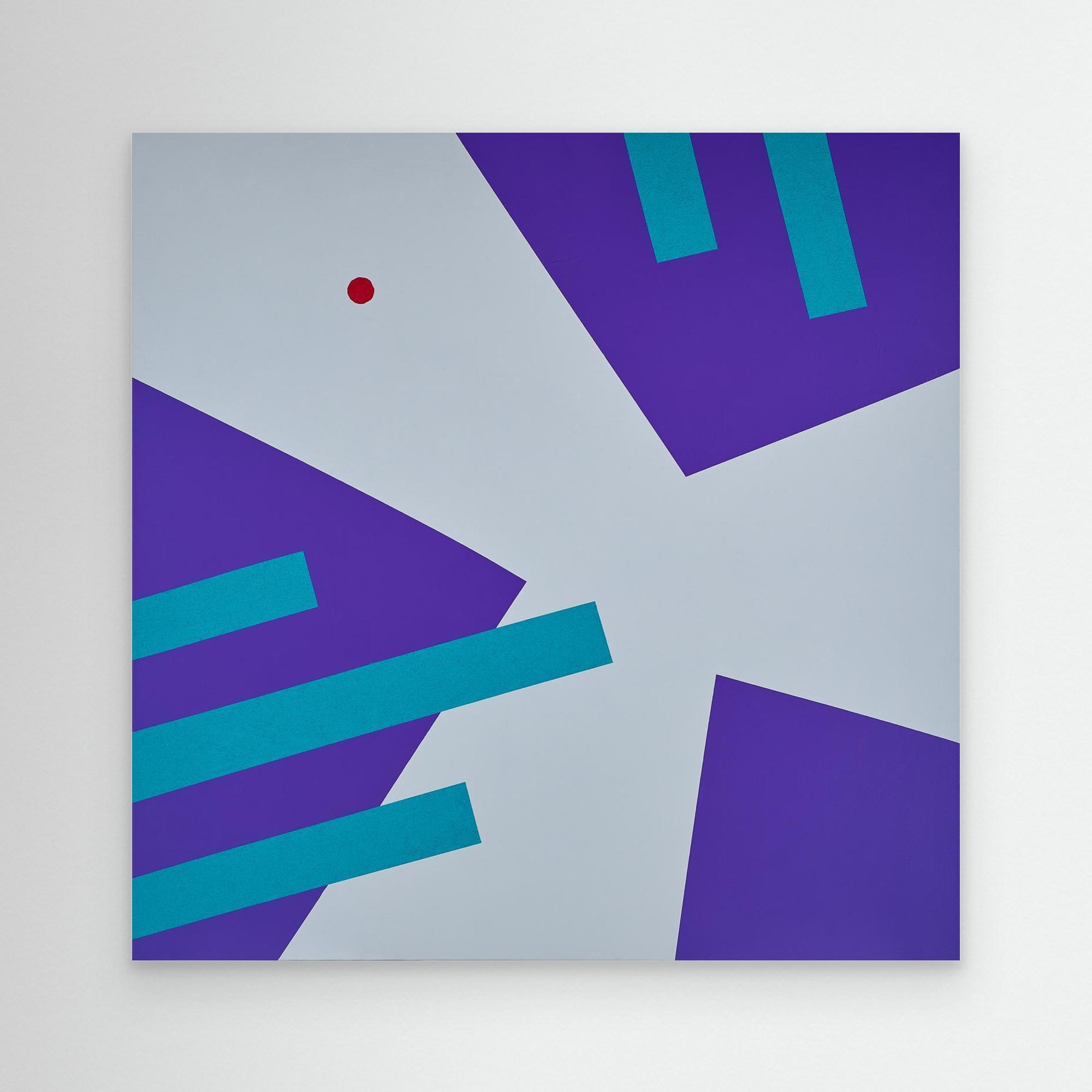
Interplay: Becoming
#3 Turning Point for Form-Driven Interiors
After a decade of stark minimalism, this year marks a shift in geometric abstract art trends. Leading galleries and design showrooms showcase geometric art that blends soft curves with sharp angles, creating compositions that feel both structured and organic. This evolution doesn’t abandon clean lines and simple geometric forms – it reinterprets them. Contemporary style in interior design now embraces:
Previous Approach (2015-2022) | 2026 Direction | Monochromatic palettes | Intentional colour relationships |
|---|---|
Flat, two-dimensional textures | Three dimensional geometric patterns |
Rigid symmetrical patterns | Geometric designs with calculated asymmetry |
Machine-perfect precision | Hand-painted imperfections |
Black, white, gray dominance | Warm metallics and earth tones |
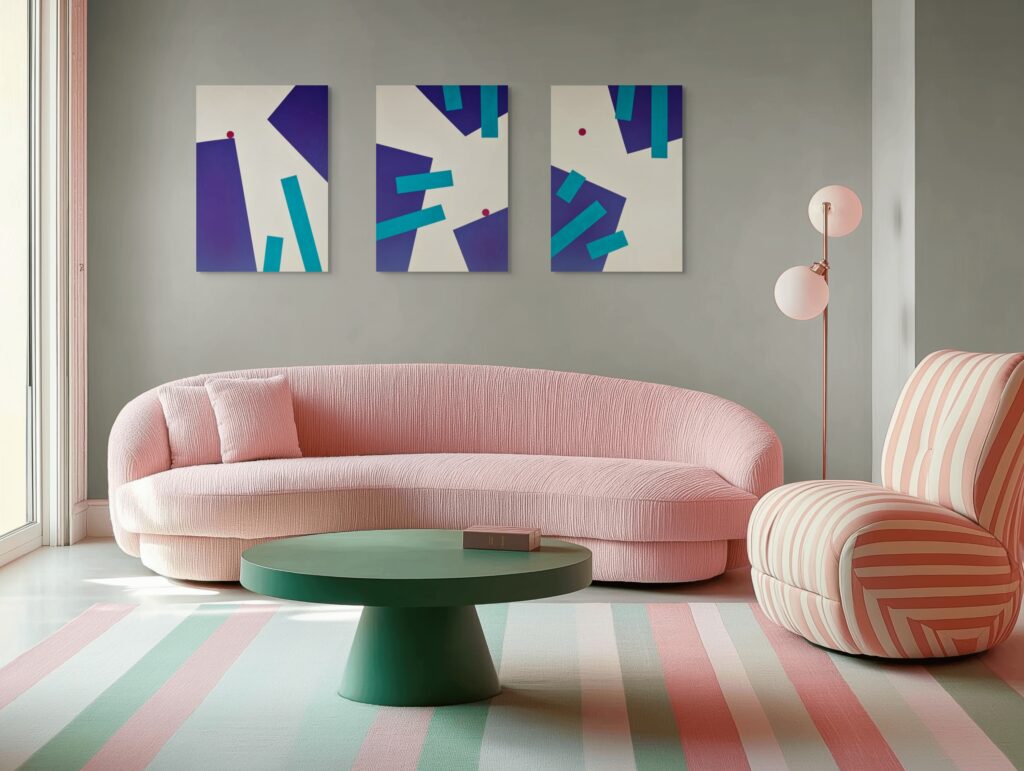
Top 5 Geometric Art Trends for 2026
Current geometric art trends blend bold minimalism with maximalist abstract compositions and incorporate 3D elements to create depth in home décor and interior design. Maximalist geometry involves intricate, layered geometric patterns and vibrant colours that evoke energy. Geometric wall art forms can be created using a variety of materials, including canvas, wood, metal, and acrylic. In interior design, geometric tiles are a standout feature in kitchens and bathrooms.
These five distinct approaches represent the most significant movements I’m observing in geometric abstract art across galleries, design showrooms, and client commissions. Each offers different styles suited to specific contexts and personal style preferences.
#1 Trend 1: Soft and Organic Geometric Abstraction
Soft and organic geometric abstraction blends structured geometry with fluid forms and gentle curves. By softening rigid lines and introducing subtle variation, these geometric wall art works bring balance, warmth, and approachability while preserving the clarity and order of geometric composition.
#1.1 Rounded Geometric Shapes, Imperfect Symmetry, and Fluid Lines
“Soft geometry” blends curves and rounded edges with underlying mathematical structure. Key features include:
- Elliptical geometric shapes that suggest movement
- Asymmetrical balance rather than mirror-image symmetry and symmetrical patterns
- Gradients that soften transitions between geometric patterns
- Hand-painted details adding warmth to precise geometric patterns and compositions
Studies show harmonious geometric forms can reduce stress, making them ideal for interior design of bedrooms and wellness-focused spaces.
#1.2 Balancing Structure with Warmth in Interior Spaces
Soft geometric art makes particular sense for living space applications where people need both visual order and emotional comfort. The structure provides organization and the organic elements provide approachability. When selecting soft geometric artwork for a space, consider:
- Colour temperature: Warm neutral tones (cream, sand, terracotta) enhance the organic feeling
- Scale relationship: Larger canvas prints with flowing forms suit open-plan areas
- Frame choice: Natural wood or frameless presentations complement the organic aesthetic
- Placement: Position where natural light can reveal subtle geometric patterns within the composition
#2 Trend 2: Neo-Deco Abstract Geometric Paintings
Neo-Deco abstract geometric paintings reinterpret Art Deco style through a contemporary lens. Defined by bold patterns, clean lines, refined symmetry, and rich colour contrasts, these geometric art pieces combine glamour and structure, making them ideal for modern living spaces adding depth and visual interest.
#2.1 Contemporary Interpretations of Art Deco Geometry
Neo-Deco represents one of the strongest currents in geometric art. This revival brings back 1920s Art Deco’s bold statement elements – zigzags, fan arches, chevrons – updated with contemporary sensibilities.
According to iCanvas projections, metallic geometric motifs will comprise approximately 25% of their 2026 sales, reflecting significant market demand for this aesthetic.
Key characteristics of Neo-Deco geometric art:
Element | Historical Art Deco | 2026 Neo-Deco | Metallics | Gold leaf, brass | Mixed metals, copper leaf, chrome |
|---|---|---|
Typography | Ornate serifs | Clean sans-serif paired with elegant serifs |
Colour palette | Jewel tones | Jewel tones plus earth tones for balance |
Symmetry | Strict bilateral | Symmetrical layouts with subtle variation |
Surface | Flat applications | Textured, light-reflective finishes |
#2.2 Elegant Symmetry, Refined Line Work, and a Modern Sense of Luxury
Neo-Deco geometric designs create immediate visual impact. Consumer research shows packaging designs using Neo-Deco elements achieve higher perceived value – a finding that translates directly to how these geometric artworks function in interiors.
For hospitality and commercial applications, Neo-Deco geometric wall art signals sophistication. One urban hotel chain reported higher guest satisfaction scores in lobbies featuring vibrant geometric murals with bold patterns versus neutral photography.
However, Neo-Deco risks visual overload if over-applied. Balance bold colours, sharp angles and intricate geometric designs with sufficient neutral space. A single Neo-Deco canvas can bring life and create visual interest to an otherwise restrained room, whereas multiple competing geometric artworks create visual chaos.
#3 Trend 3: Digital-Inspired and Algorithmic Abstract Geometric Artworks
Digital-inspired and algorithmic abstract geometric artworks draw on computational logic, repetition, and precise pattern systems. Influenced by code, data, and parametric design, these geometric wall art works translate mathematical processes into visual form, creating compositions that feel structured, contemporary, and closely aligned with digital culture.
#3.1 Parametric Design and AI-Influenced Patterns
The integration of digital tools into geometric wall art creation has moved from novelty to mainstream. Vector-based software like Adobe Illustrator and parametric tools enable artists to generate scalable, modular geometric patterns that adapt seamlessly from small canvas prints to architectural murals.
What makes digital-inspired geometry wall art distinct:
- Algorithmic precision creating geometric designs and patterns impossible to draw by hand
- Generative variations where software produces multiple iterations of a geometric design concept
- Pixel art revivals with 8-bit grids evolving into modular systems
- Parametric curves based on mathematical formulas rather than intuitive geometric wall art drawing
AI platforms now generate initial geometric forms like Fibonacci spirals, Voronoi tessellations, fractal patterns, which artists refine and interpret. This expands creative possibility significantly, though authorship debates persist within the art world.
#3.2 Bridging Digital Art and Physical Interiors
The challenge with digital-inspired geometric wall art lies in translation from screen to physical space. Digital prints must account for:
- Substrate texture and how it affects geometric precision
- Lighting conditions that reveal or flatten digital geometric prints
- Scale relationships that work on screens but fail in three-dimensional rooms
- Colour accuracy between digital preview and physical output of geometric prints
For commercial applications, LED panels and projection mapping now display evolving geometric wall art – a format gaining traction in contemporary offices, retail environments, and hospitality projects. These installations offer dynamic geometric prints that change throughout the day, responding to programming or even real-time data inputs.
Many artists working in this space create both digital installations and physical abstract art derived from the same algorithmic sources, offering clients a diverse range of format options.
#4 Trend 4: Layered Textures and Bold Shapes of Abstract Geometric Paintings
Layered textures, clean lines, geometric patterns and bold shapes give abstract geometric paintings depth and presence. By combining strong geometric shapes with tactile surfaces, these works create visual tension and rhythm, transforming flat compositions into dynamic focal points that engage both the eye and the space around them.
#4.1 Oversized Patterns and Large-Format Geometric Artworks
The scale of geometric wall art pieces has expanded dramatically. Oversized geometric abstracts often exceeding 4×6 feet now anchor residential living spaces and commercial lobbies as primary focal point elements to create visual interest.
Gallery data shows geometric wall art pieces in hospitality settings boost visitor perceptions of professionalism when featuring bold colour relationships like complementary hues (cadmium red against cyan blue). These aren’t subtle geometric designs meant to blend into backgrounds – they’re intentional geometric wall art statements.
#4.2 Creating Focal Points in Residential Spaces and Commercial Interiors
When selecting oversized geometric artwork as a feature wall anchor, architectural alignment matters enormously. I often design custom canvases specifically to align with existing architectural lines – door frames, window proportions, colour palette, ceiling heights – enhancing the perception of intentional order.
Practical considerations for large-format geometric wall art:
- Wall preparation: Large geometric art pieces require adequate mounting infrastructure
- Viewing distance: Ensure enough space for viewers to step back and appreciate the full composition
- Lighting: Large geometric wall art need consistent illumination to avoid hot spots
- Surrounding simplicity: Bold patterns demand restraint in surrounding office and home decor
Three dimensional textures add significant impact to oversized geometric wall art. Plissé pleats, ripple textures, and raised geometric motifs (often laser-cut from plexiglass or metal) catch light differently throughout the day, adding depth that flat digital prints cannot achieve.
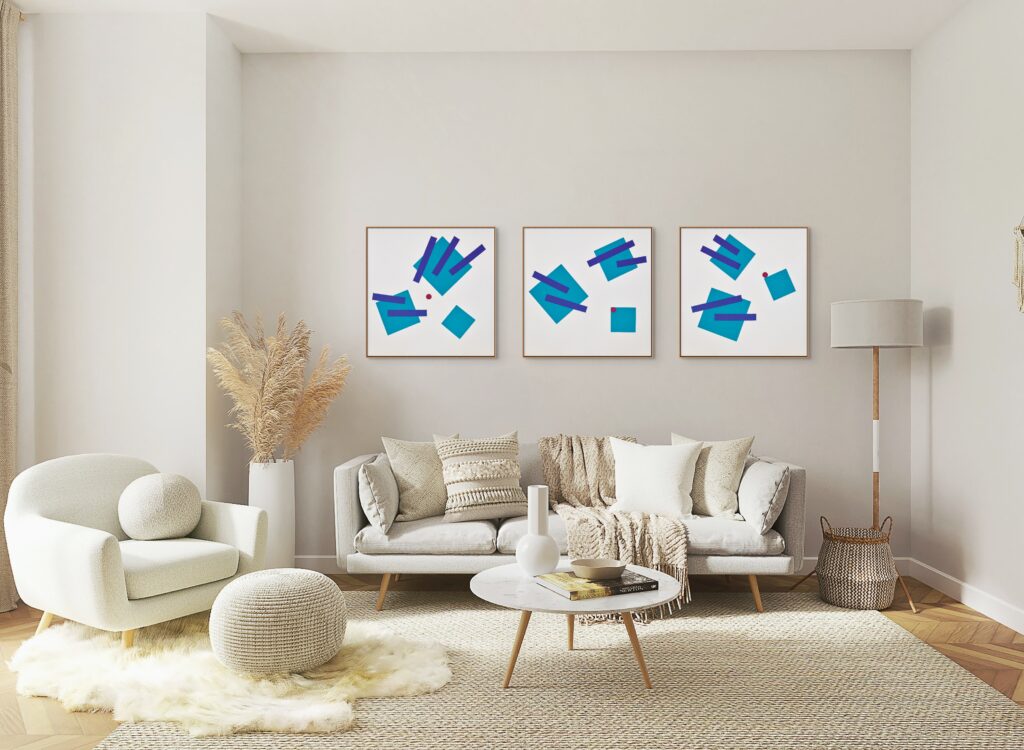
#5 Trend 5: Colour-Driven Abstract Geometric Wall Art
Colour-driven abstract geometric wall art place hue at the center of the composition. Through intentional colour relationships and contrast, these works shape mood, energy, and spatial perception, using geometric structure as a framework to create visually striking and emotionally resonant compositions in interior design.
#5.1 Intentional Colour Choices and Expressive Contrast
While form defines geometric art, colour determines its emotional impact. Colour-driven geometric wall art prioritize hue relationships as structural elements rather than decorative additions.
The 2026 palette for geometric art divides into several distinct directions:
- Saturated Depth
- Ink blue, forest green, oxblood, charcoal
- Paired with off-whites and warm neutral tones
- Creates sophisticated, gallery-like presence
- Mediterranean Earth
- Terracotta, camel, muted ochre, clay pink
- Simple shapes in warm, approachable combinations
- Suits residential contexts seeking comfort over drama
- Retro-Futurist
- Mustard, teal, rust, black
- References 1970s and Art Deco palettes
- Appears in rugs, posters, and tile layouts
- Controlled Monochrome
- Black, white, plus one accent (cobalt or burnt orange)
- Keeps busy patterns calmer
- Easier to live with in bedrooms and minimalist spaces
#5.2 Using Colour as a Defining Structural Element Within Geometric Art
In geometric art, colour functions as a structural element rather than decoration. Carefully chosen hues define form, create rhythm, and establish spatial relationships, allowing colour to organize the composition as clearly as strong lines or bold shapes. In geometric op art traditions, colour creates motion and optical illusions through precise juxtaposition. Contemporary geometric artists extend this principle, using colour contrast to define spatial relationships within abstract compositions and optical illusions they evoke.
The table below outlines how different colour approaches in abstract geometric wall art influence spatial perception and where they work best.
Colour Approach | Spatial Effect | Best Application | High contrast | Creates visual tension, draws eye | Hallways, dining rooms, galleries |
|---|---|---|
Tonal gradients | Suggests depth, feels calming | Bedrooms, meditation spaces |
Complementary pairs | Energizes, professional impact | Offices, hospitality, retail |
Monochromatic | Emphasizes form over mood | Minimalist spaces, gallery wall displays |
When selecting colour-driven geometric art, echo one or two key hues across textiles, existing decor, and accessories for cohesion. A geometric cushions set picking up accent colours from a canvas creates intentional harmony rather than competing elements.
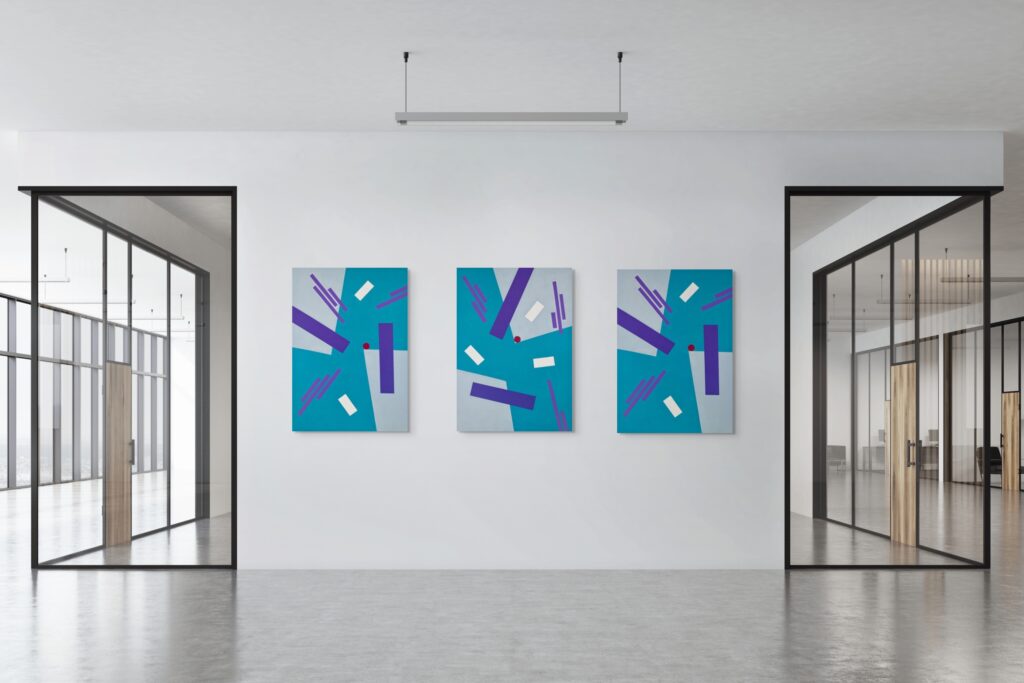
Applying Contemporary Abstract Art Trends Across Interior Spaces
Geometric wall art can easily complement various interior styles, from industrial to minimalist. However different contexts demand different approaches to geometric designs. What works as a bold statement in a hotel lobby may overwhelm a bedroom. Understanding spatial requirements ensures geometric abstract art enhances rather than fights its environment.
#1 Living Rooms and Social Spaces
Living rooms offer ideal opportunities for geometric wall art to take centre stage. These living spaces benefit from:
#1.1 Scale and Placement
- One or two large geometric gestures (artwork above sofa, or geometric rug anchoring seating)
- Vertical geometric artwork or panels can visually raise ceilings in small apartments
- Coffee tables with geometric bases echoing art forms from wall art
#1.2 Balance Strategies
- Pair geometric painting or canvas print with curved furniture (round coffee tables, arched floor lamps)
- Use geometric cushions and throws to echo lines from main artwork
- Limit other elements and various shapes to prevent visual competition
#1.3 Material Considerations
- Canvas geometric prints suit most residential contexts
- Metal or mixed-media pieces add textural variety
- Framing should complement room finishes rather than compete
The living room gallery wall trend continues, but 2026 favors fewer, larger abstract pieces over collections of small frames. A single oversized geometric abstract creates more impact than a dozen smaller works.
#2 Bedrooms and Restful Areas
Bedrooms require balanced look and gentler approaches to geometric art choices. The goal here is creative expression that supports rest rather than stimulation.
#2.1 Pattern Selection
- Thin stripes, small-scale diamonds, tone-on-tone grids
- Muted colours maintaining calm mood
- Subtle geometric designs rather than high-contrast bold patterns
#2.2 Focal Point Strategy
- Single geometric headboard wall (painted various shapes or geometric wallpaper)
- Pair of symmetrical geometric artworks above bedside tables
- Balance abstract art feature wall with plain linens and curtains
#2.3 Shape Psychology
- Round or oval motifs (circles, arcs, half-moons) read as particularly relaxing
- Avoid sharp angles directly in sightline from bed
- Soft curves in bedside lamps, mirrors, and prints enhance tranquility
The balanced look in bedrooms comes from restraint. Let one geometric element dominate while keeping everything else supportive. A tufted wool rug with bold patterns beneath the bed can anchor the space while walls remain calm.
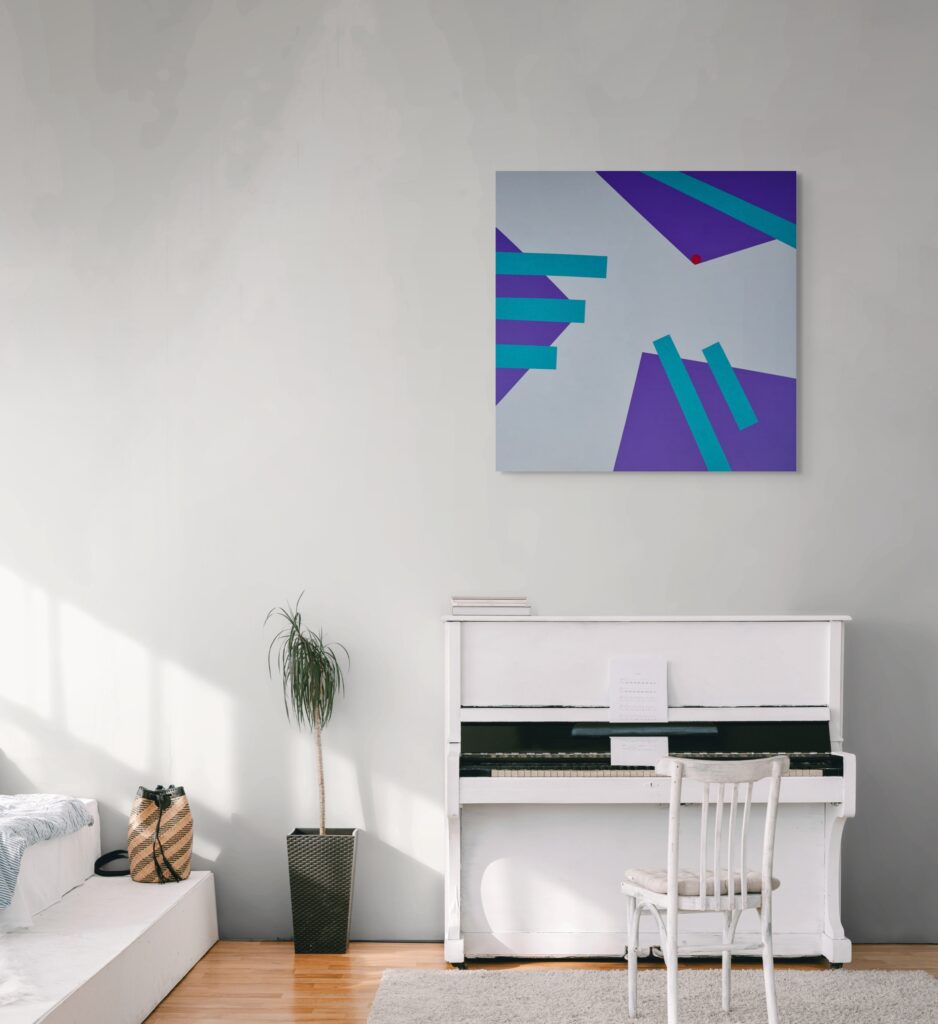
#3 Commercial Spaces
Commercial and professional spaces benefit from geometry that supports function while making aesthetic statements.
#3.1 Home Offices and Studios
- Geometry supporting focus: clean lines, clear verticals and horizontals
- Large geometric pinboard or wall planner as both tool and design feature
- One energizing accent colour (cobalt, mustard, coral) within geometric art near desk
- Aligned compositions where shelves and art edges follow simple grids and shapes
I plan compositions for studio walls by either aligning functional elements with the same grid as abstract artwork or geometric prints to create unified visual systems and to bring balance, or by deliberately introducing contrast to establish a clear focal point and visual tension within the working environment through bold patterns.
#3.2 Hospitality and Retail
- Large-scale geometric murals, abstract art original paintings and canvas prints establish brand presence
- Bold colours and intricate geometric designs suit high-traffic areas
- Durability matters: specify materials that withstand commercial use
- LED panels with evolving geometric patterns suit contemporary restaurants and hotels
#3.3 Commercial Offices
- Studies indicate 15% productivity gains in environments with minimalist geometric art versus busy figurative works
- Acoustic panels with geometric patterns serve dual function
- Geometric shapes are foundational in branding for tech and finance companies, conveying reliability and forward-thinking ideas
The abstract art style offers flexibility across commercial contexts and interior designs. Neo-Deco suits luxury hospitality, digital-inspired patterns fit tech companies, and soft organics work for wellness brands.
🖼️Geometric Art in Modern Design Quiz
Test your understanding of original geometric art.
Question 1 of 3
Why does well-balanced geometric art tend to feel timeless rather than trendy?
What is the most effective way to use geometric art in a small interior?
When choosing between original geometric art and prints, which factor most affects long-term value?
Final Insights For Collectors, Designers, and Homeowners about Geometric Wall Art 2026
Geometric art in 2026 represents a mature creative expression that transcends both the rigid minimalism of previous decades and the chaos of purely decorative approaches. The trends I’ve outlined – soft organics, Neo-Deco, digital-algorithmic, layered textures, and colour-driven compositions – each offer pathways for integrating geometric forms into lived environments.
For Collectors
- Geometric abstraction maintains stable investment value with 12-18% annual appreciation
- Hand-painted iterations on canvas or aluminum panels offer subtle imperfections that humanize machine-perfect forms
- Commission custom abstract art pieces for site-specific architectural dialogue
For Designers
- Consider adaptive LED backlighting for evolving light interactions in commercial projects
- Specify sustainable materials: recycled metals, bio-resins, FSC-certified substrates
- Balance client preferences with spatial proportions – what works in isolation may fail in context
For Homeowners
- Start with geometric cushions, a single canvas, or rug before committing to feature wall or tiled floors
- Test arrangements with painter’s tape on walls before purchasing
- Echo 1-2 key hues from geometric art across textiles and accessories
Whether you’re commissioning original geometric artwork, selecting from contemporary artists, or experimenting with digital canvas prints, the principles remain consistent: balance bold statement pieces with restraint, respond to existing architecture, and choose geometric art that resonates with your personal style while serving the space’s function.
Geometric art makes its strongest impact when treated as integral to interior design rather than afterthought. When it works, the geometry of the art and the geometry of the architecture speak the same visual language and the result is spaces that feel both intentional and alive.
How Will You Use Geometric Art to Define Your Space in 2026?
Transform Your Space with Uplifting Art
Browse my collection of mood-boosting geometric paintings.
FAQ - Frequently Asked Questions
Balanced geometric art with restrained palettes tends to age gracefully, while trend-heavy applications may feel dated within 5–10 years.
Vertical compositions can visually raise low ceilings, while avoiding busy geometric patterns on all four walls prevents overwhelm. Select one feature wall and keep the others calm with subtle geometry or solid colours.
Canvas prints offer greater budget flexibility and the freedom to change artwork as tastes evolve. For long-term, investment-grade collecting, original works generally appreciate more reliably than reproductions.
A useful starting point is photographing your space and identifying the geometry already present before introducing additional geometric elements.
