The Minimalist’s Guide to Choosing Wall Art
Table of Content
Creating a Calm, Minimalist Sanctuary with Art
You’ve carefully curated a serene, minimalist home. Every piece of furniture serves a purpose, surfaces remain uncluttered, and a quiet sense of balance pervades the room. The next step is selecting wall art that enhances this tranquillity. The right minimalist wall art can transform a space, adding personality, texture, and depth while maintaining harmony. Now, the question is: how to choose a perfect piece?
This guide is designed for homeowners, art collectors, and interior designers, anyone seeking to preserve a minimalist aesthetic while choosing artwork that elevates their space. It provides practical advice on selecting, sizing, and positioning art, ensuring each piece contributes to the calm, balanced atmosphere of your home. With a thoughtful approach, you can maintain the tranquillity of your home while allowing your walls to express who you are.
Understanding Minimalist Wall Art
Minimalist art is defined by simplicity, intention, and clarity of geometric shapes. Geometric patterns are a staple of minimalist wall art, often featuring repetitive shapes and subtle colours. It often uses uncluttered compositions and generous negative space, allowing the artwork to breathe and making each element meaningful. Common styles include abstract, geometric, and typography-based designs, but the key is that every piece complements the space rather than competing with it.
The ideal piece introduces depth, clean lines, texture, and subtle personality without overwhelming the room. Seek artwork that resonates personally, pieces that tell a story, evoke a memory, or simply bring you joy. When chosen with care, minimalist art enhances your environment, turning walls into a curated expression of your taste and style.
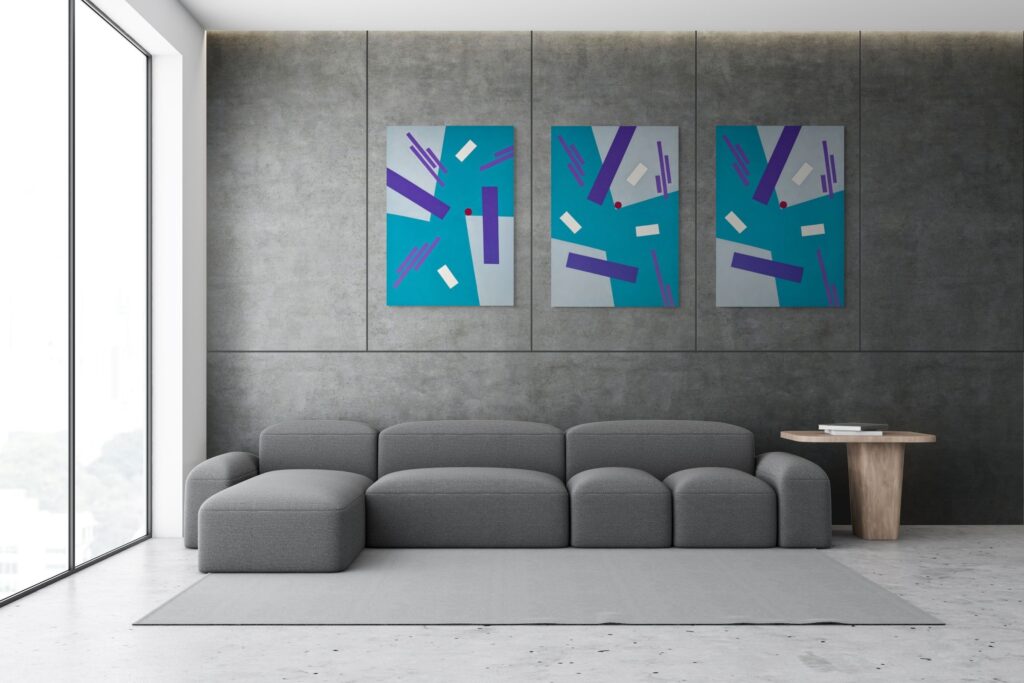
Start with Intention: Why Minimalist Art Matters
What truly makes a piece of art “minimalist”? It is not defined by a single style, colour palette or subject matter. Rather, it is determined by the role the artwork plays within your space.
Minimalist wall art focuses on simplicity and often contains more white space than detail. Minimalist designs frequently feature clean lines and simple shapes, which contribute to a calm and balanced aesthetic that complements modern interiors. It comes in many forms, including abstract, geometric, and typography styles.
In a minimalist interior, art should feel purposeful. Think of it as punctuation within a sentence. A large, striking piece can function as a confident full stop – anchoring the room and establishing a clear focal point. A carefully arranged group of smaller works may introduce rhythm and subtle movement, encouraging a closer look without overwhelming the eye. Text-based art featuring motivational quotes or single words can bring character and purpose to your walls.
The essence of minimalist art lies in restraint and clarity. Instead of filling every wall, you select fewer pieces with greater intention. Each artwork should justify its presence, whether by adding depth, texture, contrast or quiet character.
Understanding Your Space: Assessing Walls, Light, and Room Function
Before you select the perfect wall art for your living room, bedroom, or any other interior take a moment to truly understand your space. Start by observing the size and shape of your walls. Are they expansive and open, or more compact and intimate? Large walls with ample natural light are ideal for a bold statement piece or a minimalist gallery wall, allowing you to create a striking focal point that draws the eye. In contrast, smaller walls or dimly lit corners may benefit from a series of smaller prints or a single, thoughtfully chosen artwork that adds character without overwhelming the room.
Consider how natural light interacts with your space throughout the day. Sunlight can enhance the vibrancy of abstract prints or highlight the subtle details in black and white photography, while shaded areas might call for art with more vibrant colours or geometric patterns to add energy and depth. The function of your living room, bedroom, or any other interior also plays a crucial role in choosing wall art. If your space is a sanctuary for relaxation, opt for calming pieces that promote tranquility, such as minimalist gallery wall arrangements or serene abstract prints. For rooms that double as home offices or creative hubs, select art that inspires focus and creativity – choose dynamic geometric patterns or a statement piece with bold colours.
By thoughtfully assessing your walls, the available light, and the purpose of your space, you can create a cohesive look that not only enhances the interior but also reflects your personal style. The right wall art will feel like a natural extension of your room, elevating both its function and its atmosphere.
Explore the three pieces of Playtime Triptych by Adra and experience how each panel interacts with the others. Together, they create a coherent composition of geometric patterns and vibrant colour, transforming your wall into a modern, engaging focal point.

Playtime: Energetic
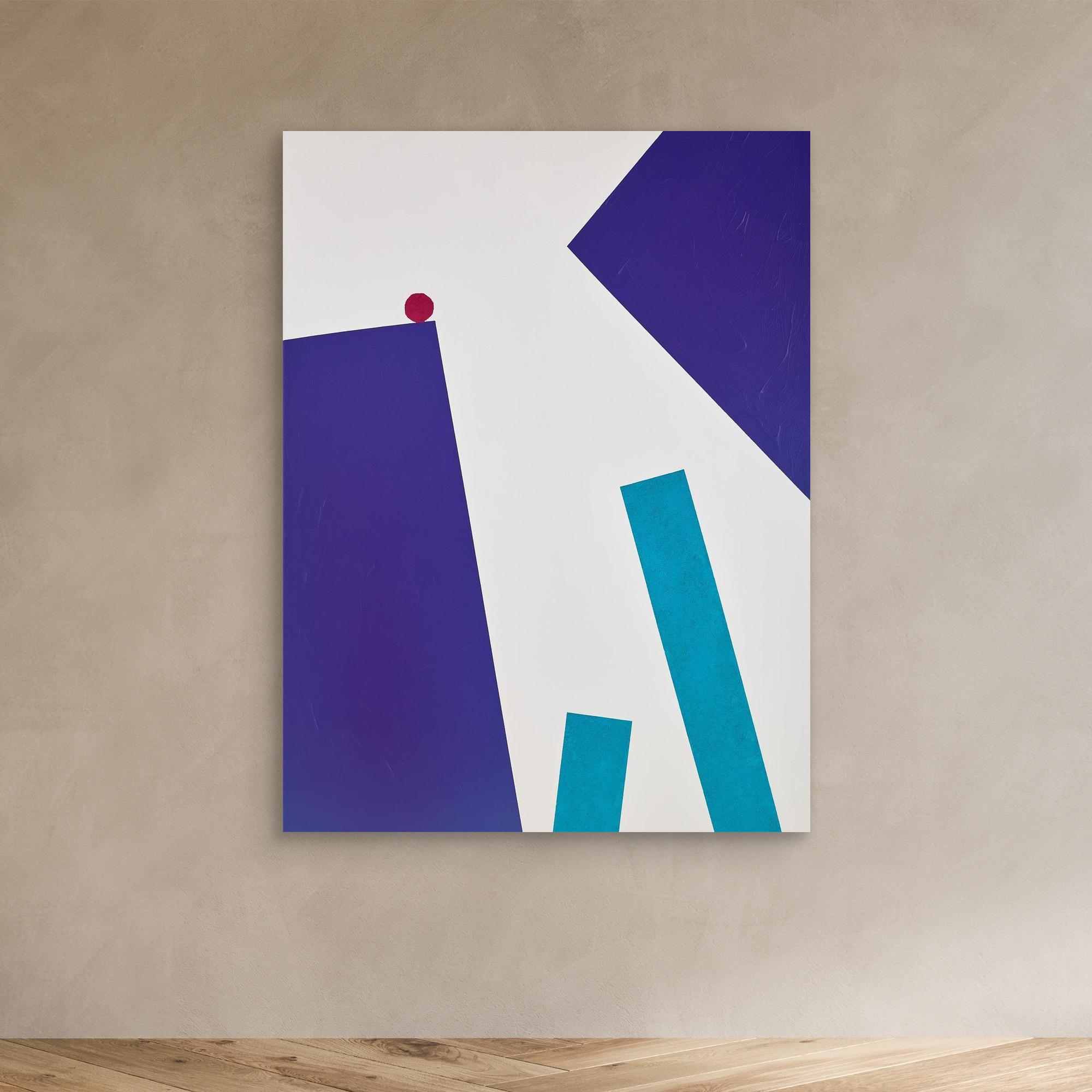
Playtime: Bouncy

Playtime: Adventure
Key Considerations for Minimalist Wall Art
Choosing the right wall art for a minimalist space involves balancing scale, style, and placement. This table summarises the key considerations, giving you a clear, practical guide to selecting pieces that enhance your home without disrupting its calm.
Aspect | Guideline / Tip | Why It Matters | Scale and proportion | Follow the Two-Thirds Rule above furniture; centre art at eye level (57–60 inches) | Ensures harmony and prevents the piece from feeling too small or overwhelming |
|---|---|---|
Negative space | Leave space around the artwork; don’t fill every wall | Allows the piece to breathe and maintains calm and balance |
Colour palette | Use neutrals (whites, greys, beiges) as a base; introduce one accent colour sparingly | Preserves tranquility while adding personality and focus |
Art style | Line art, geometric abstracts, typography, monochromatic photography | Complements minimalist interiors and keeps visual clutter minimal |
Composition | Single statement piece, symmetrical grid, or asymmetrical cluster | Guides the eye, creates a focal point, and adds structure to the room |
Framing and materials | Thin, neutral frames; gallery-wrapped canvas; metal or acrylic prints. Keep frames consistent in colour and spacing for a visually cohesive gallery wall | Keeps presentation simple and cohesive with minimalist aesthetics. Consistent frames and spacing create an organized, harmonious display |
Room placement | Consider the function of the space, lighting, and wall size | Ensures the artwork enhances the environment, not just the wall |
By keeping these guidelines in mind, you can confidently curate minimalist wall art that creates harmony, adds personality, and transforms your space into a serene, thoughtfully designed environment.
Now let’s take a look at each of them separately.
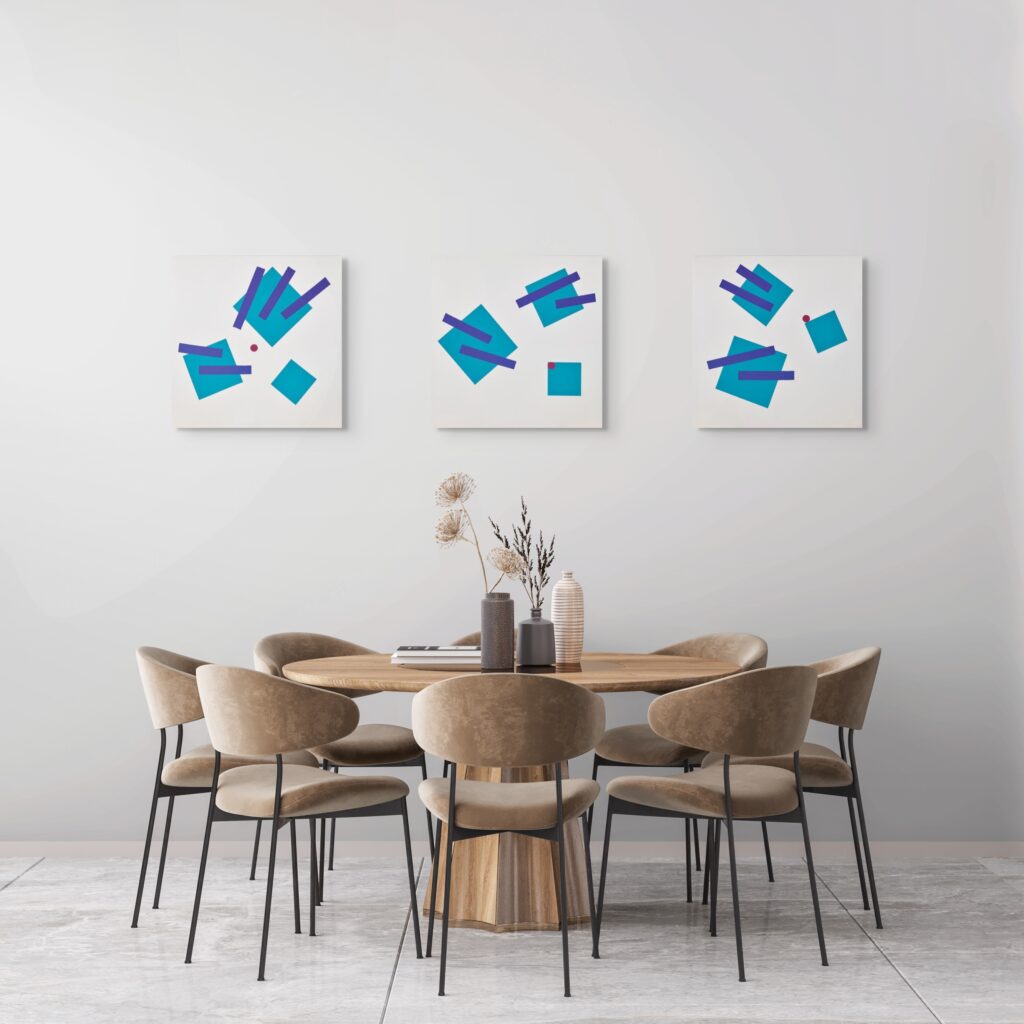
Scale and Proportion: Getting the Size Right
Choosing the correct scale is often the most challenging part of selecting artwork. A piece that is too small can appear insignificant, while one that is too large may overwhelm the room. Achieving balance is simply a matter of proportion. When choosing wall art, always consider wall size to ensure the artwork fits the space appropriately.
A single, generously sized artwork can anchor a space beautifully, provided it relates well to the furniture and architecture around it. The following guidelines offer a reliable starting point fro creating minimalist gallery wall:
#1 The Two-Thirds Rule
When placing art above a sofa or bed, console or headboard, aim for a piece or grouping that measures about two thirds the width of the furniture beneath it. For instance, if your sofa is 90 inches wide, the artwork should be approximately 60 inches across. This creates harmony without crowding the space.
#2 The Eye-Level Rule
The centre of the artwork should sit around 57–60 inches from the floor, which corresponds to average eye level. This ensures the piece feels naturally positioned and comfortable to view.
#3 Gallery Wall Spacing
Gallery walls should maintain consistent spacing between frames, typically 2 to 4 inches apart, to create a cohesive look. Using frames consistent in colour and style, along with uniform spacing, helps achieve an organized and harmonious gallery wall.
Embrace Negative Space for a Cohesive Look: Let the Room Breathe
In minimalist interiors, what you leave empty is just as important as what you display. Negative space, the blank area surrounding an object allows the eye to rest and gives artwork the prominence it deserves. Creating an artwork room or a dedicated area for displaying art can further enhance the balance and tranquility of a minimalist space by allowing for thoughtful arrangement and framing choices.
There is no obligation to fill every wall. An unadorned surface is not unfinished; it is intentional. Restraint creates calm.
If you are uncertain about scale or placement, test it before committing. Cut paper to the exact dimensions of the proposed artwork and fix it to the wall with masking tape. Live with it for a day or two. This simple step allows you to assess proportion and impact without making unnecessary holes and ensures that when you do hang the piece, it feels considered and correct.
Colour Palette and Tone for Clean-Lined Wall Art: Crafting a Refined Minimalist Look
Colour is a powerful element in interior design, and in a simple space, it should be used deliberately. When creating a gallery wall, it is important to stick to a limited colour palette and similar frame styles to keep the overall look cohesive. The aim is to preserve a calm, serene atmosphere. Neutral tones such as whites, beiges, and greys provide a soothing backdrop, allowing the space to feel open and balanced. Neutral colours serve as a foundation for clean-lined wall art, contributing to a cohesive and uncluttered aesthetic that suits most home interiors.
That does not mean your interior must be colourless. Strategic use of bolder hues can add energy and personality, provided they are used sparingly. A single, carefully chosen accent colour introduced through artwork or a statement piece can create visual interest without overwhelming the senses. Contrasting colours can make artwork stand out, especially against neutral walls, while vibrant colours can be used for a bold, modern look that draws the eye. By keeping the overall palette restrained, each colour gains impact and reinforces the simple aesthetic.
Materials and Framing: Simplicity in Presentation
In a simple setting, how art is displayed is just as important as the artwork itself. The key principle is restraint. A few thoughtful options work particularly well:
- Framed Prints – Choose simple, thin frames in neutral tones such as black, white, or natural wood. Slim black frames are a classic, unobtrusive option that supports and complements the artwork without distraction. The frame should define the artwork cleanly without drawing attention to itself.
- Frameless Canvas – Gallery-wrapped canvases offer a modern, uninterrupted look, integrating seamlessly into a simple wall.
- Metal or Acrylic Prints – Sleek and contemporary, these prints often appear to float from the wall and add subtle sophistication.
The decision between framed and unframed art should reflect the piece itself and the overall atmosphere you wish to create. In all cases, simplicity is the guiding principle: let the artwork speak, and let the presentation remain understated.
As an alternative to wall mounting, consider placing artwork on a console table to enhance the room’s aesthetic and create visual balance.
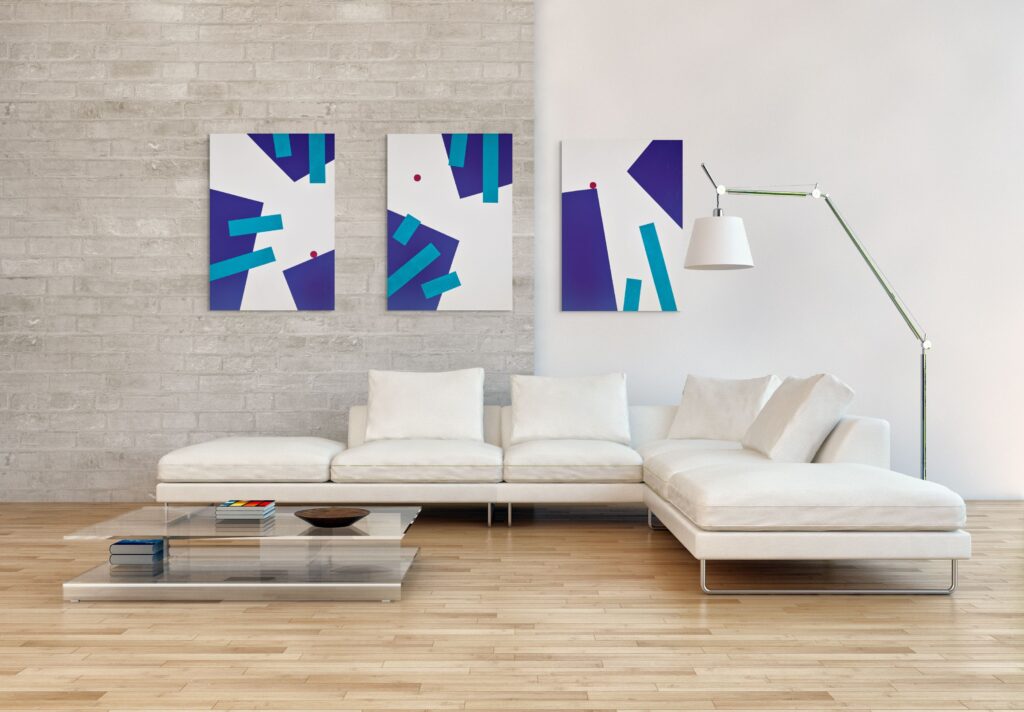
Mixing Textures and Finishes: Adding Subtle Depth to Simple Spaces
Simple spaces thrive on simplicity, but that doesn’t mean they have to feel flat or one-dimensional. Mixing textures and finishes is a subtle yet powerful way to add depth and interest to your walls while maintaining a clean, contemporary gallery wall. Consider pairing smooth, glossy framed prints with the tactile quality of a textured canvas or introducing a fabric wall hanging alongside paper art. These gentle contrasts create a layered look that draws the eye without overwhelming the space.
For a truly cohesive effect, try combining different finishes within the same contemporary gallery wall. For example, alternate between thin black frames and natural wood or light oak to add warmth and variety. Incorporating natural materials like linen mats or wooden frames can often the overall look and bring a touch of organic texture to your artwork. Even a single piece with a unique finish, such as a matte photograph or a subtly textured abstract print, can make a big difference.
The key is to keep the variations understated and intentional. By thoughtfully mixing textures and finishes, you create a minimalist space that feels dynamic and inviting, proving that even the simplest art displays can have rich visual interest.
Choosing Art with Composition Options in Mind: From a Bold Statement Piece to a Curated Collection
Contemporary wall art can be displayed as a single statement piece or as part of a curated gallery wall, depending on the desired effect. Key tips for minimalist wall art include choosing neutral palettes, embracing negative space, and using bold, large-scale pieces to make a statement. When you choose art, look for opportunities to create contrast by pairing statement pieces with more minimalist works to achieve visual balance and emphasis. Stick to a limited neutral colour palette (whites, blacks, greys, beige, taupe) to ensure the art complements rather than competes with existing décor.
Before deciding on wall art, consider its role in the room. Custom acrylic and oil paintings are a great way to add a personal touch and unique meaning to your minimalist decor, reflecting your identity or heritage. Do you want a single piece to dominate and define the space, or a curated selection that tells a subtle, layered story?
#1 The Single Statement Piece
A large-scale artwork can act as a bold focal point above a sofa, bed, or fireplace. Artworks featuring fluid lines can evoke movement and emotion, making them ideal for statement pieces in minimalist interiors. It commands attention and immediately anchors the room, creating a sense of confidence and cohesion without the need for additional pieces.
#2 The Symmetrical Grid
Arranging multiple pieces of the same size and frame in a precise, orderly grid produces a calm, structured effect. This layout works well in minimalist spaces, providing rhythm and balance while keeping the display visually satisfying.
#3 The Asymmetrical Cluster
For a more organic and personal feel, an irregular grouping of artworks can suggest a collection built over time. Balance is essential: maintain tight, consistent spacing to achieve a cohesive look and ensure the arrangement feels intentional rather than chaotic.
Your choice should reflect the room’s function, size, and overall design. A single statement piece works best in open, uncluttered areas, while a curated group can add texture and narrative to larger walls. Whichever approach you take, let simplicity, proportion, and balance guide your decisions.
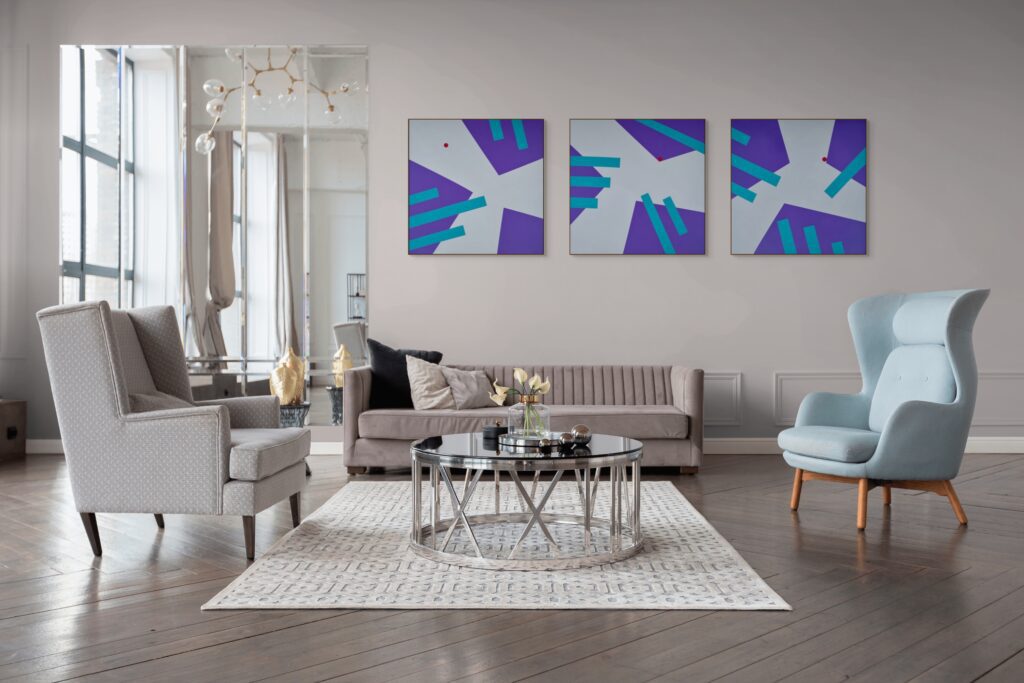
Choosing Art for Your Style: Personalizing Minimalism
Minimalist wall art doesn’t mean sacrificing personality or warmth. It’s about curating pieces that reflect your unique style while maintaining a sense of calm and order. Start by considering what resonates with you: do you gravitate toward the timeless appeal of black and white photography, the nostalgic charm of vintage posters, or the organic beauty of nature-inspired artwork? Each choice can add a personal touch to your living room, making the space feel truly your own.
To keep your minimalist aesthetic cohesive, focus on clean lines, neutral colours, and the strategic use of negative space. Framed prints in thin black frames or light oak can unify a collection of artworks, while also adding subtle visual interest. Don’t be afraid to introduce contrasting colours or textures, perhaps a single vibrant piece among a series of neutral works, or a mix of smooth and textured finishes, to create depth without disrupting the serene atmosphere.
Personalizing your minimalist wall art is also about balance. Choose pieces that evoke a sense of calm and simplicity, but don’t shy away from art that tells your story, whether it’s a custom portrait, a favourite quote, or a still life that reminds you of a special place. By thoughtfully selecting artwork that aligns with your personal taste and the unique qualities of your living room, you’ll create a space that is both visually harmonious and deeply meaningful – a true reflection of your style within a minimalist framework.
Selecting Wall Art for a Living Room: Minimalism Meets Everyday Life
The living room is the heart of the home – a place for relaxation, conversation, and connection. When choosing wall art for this space, the goal is to enhance the room’s atmosphere without disrupting its calm. Minimalist wall art, such as abstract prints or black and white photography, is a timeless choice that brings sophistication and serenity to your living room.
Start by considering the mood you want to create. Do you envision a tranquil retreat or a space that sparks conversation? The perfect wall art should reflect your personal taste and style, whether that means a bold statement piece or a collection of smaller prints arranged with care. For large walls, a single oversized artwork can anchor the room and serve as a striking focal point. In smaller spaces, a series of smaller prints or framed art can add personality without crowding the wall.
Pay attention to scale and placement. Artwork should feel balanced within the space, neither lost nor overpowering. Embrace negative space around your art to maintain a serene atmosphere and let each piece breathe. Ultimately, the best minimalist wall art for your living room is one that feels authentic to you, creating a room that is both visually calm and full of character.
Style Inspiration: Geometric Patterns and Art That Suits Minimalist Interiors
Minimalist wall art comes in many forms, including abstract, geometric, and typography styles. While personal taste should always guide your choices, certain styles naturally complement a minimalist aesthetic. These approaches emphasise simplicity, form, and balance, helping your walls enhance the calm of your space without visual clutter. Consider the following options:
#1 Line Art
Simple, elegant and expressive, line art uses minimal strokes to convey form. Minimalist abstract line art often features monochromatic palettes, typically black ink on a white background. Its pared-back approach embodies the principle of “less is more,” making it ideal for creating understated yet impactful statements.
#2 Geometric Abstracts
Defined by clean shapes and often a restrained colour palette, geometric abstracts introduce structure and rhythm. These works add visual statement while maintaining the sense of order crucial to minimalist interiors. Seek artists who focus on simplicity and precision to avoid overly busy compositions.
#3 Minimalist Photography
This style captures uncluttered compositions, frequently in monochrome or muted tones. Iconic examples include a solitary tree in a snowy landscape or the sharp lines of a building against the sky. Minimalist photography conveys stillness and space, making it a perfect complement to serene interiors.
#4 Monochromatic Art
Using shades of a single colour, monochromatic pieces highlight texture, light, and form over complex palettes. This approach ensures cohesion and subtlety, allowing the work to harmonise effortlessly with other elements in the room. For example, monochromatic photography captures moments in their purest form, creating striking wall art.
#5 Typography-Based Art
Typography-based art often uses clean, sans-serif fonts or hand-drawn lettering for a personal touch. Text-based art featuring motivational quotes or single words can add character and purpose to minimalist decor.
#6 Nature-Inspired Minimalist Art
Nature-inspired minimalist art, featuring still life, botanical illustrations or serene landscapes, promotes relaxation and mental clarity. Consider using textured or sculptural pieces made with natural materials and earthy tones for added depth and interest.
#7 Additional Inspiration
Acrylic and oil paintings, vintage posters, abstract canvas prints, and black and white photography can also integrate beautifully into a minimalist scheme when chosen thoughtfully. Aim for a restrained palette and simple framing to keep the overall effect calm and balanced.
By selecting styles that emphasise clarity, and form, you can create a minimalist wall art gallery that feels intentional, cohesive, and visually restful.
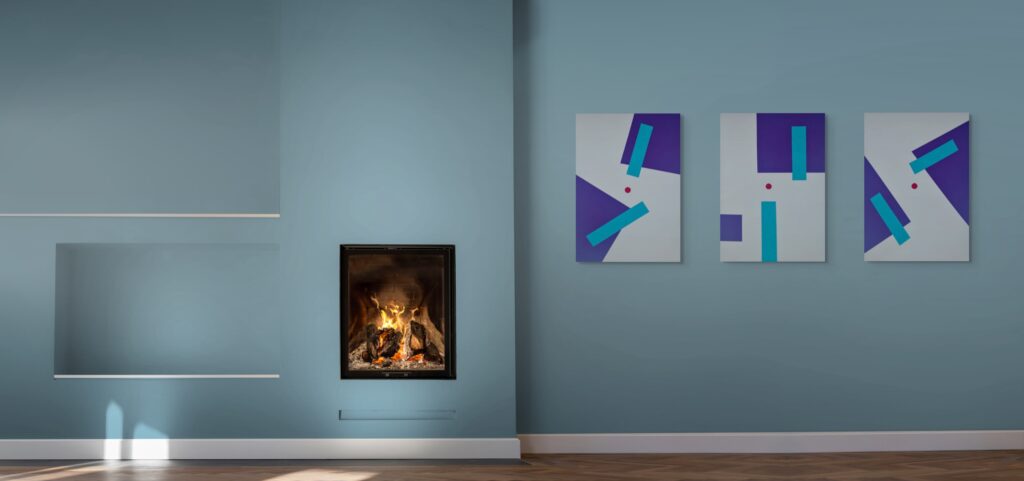
Alternative to Gallery Walls: Minimalist Display Ideas Beyond the Grid
If the classic gallery wall isn’t your style, there are plenty of minimalist alternatives that can make just as much of an impact. One striking option is to feature a single, oversized statement piece, such as a bold abstract print or a serene black and white photograph. This approach creates a strong focal point, keeping the room feeling open and uncluttered.
Another idea is to use a minimalist shelf or art ledge. Displaying a few carefully chosen pieces, perhaps a mix of framed prints and sculptural objects, lets you easily update your display while maintaining a clean, streamlined look. Opt for thin frames or even frameless art to reinforce the minimalist aesthetic and keep the focus on the artwork itself.
Don’t be afraid to leave some walls empty. In a minimalist setting, empty space is just as important as the art you choose to display. By embracing simplicity, you can create a unique, modern alternative to the traditional gallery wall – one that feels intentional, stylish, and perfectly suited to your minimalist room.
🖼️Quiz: The Minimalist’s Guide to Choosing Wall Art
Test your understanding of choosing wall art for minimalist spaces.
Question 1 of 3
What is the primary purpose of minimalist wall art in a minimalist interior?
Which of the following is a key principle when sizing artwork above a sofa or bed?
Which of these styles is considered ideal for minimalist wall art?
From Measure to Hang: Step-by-Step Guide to a Perfect Focal Point
Ready to display your artwork? Don’t rely on guesswork – a few careful steps will ensure it is hung perfectly every time. Using proper techniques for hanging art is essential to achieve a balanced and visually appealing display.
Minimalist wall art is also ideal for home offices, where calming or inspiring pieces can help create a productive environment.
#1 Measure Your Space
Start by measuring both your wall and the artwork. Revisit the scale guidelines to ensure the piece fits proportionally within the space.
#2 Create a Template
Cut a piece of kraft paper to match the exact dimensions of your artwork. This allows you to visualise how it will look on the wall.
#3 Tape and Test
Use painter’s tape to attach the template in your intended position. Live with it for 24–48 hours to see if the placement feels right. This prevents common mistakes and gives you time to adjust.
#4 Mark the Hanging Point
Once satisfied, mark the spot for the nail or hook. Measure carefully from the top of the frame to the hanging wire or hook, rather than marking from the top edge of the frame itself.
#5 Install Hardware
Choose the correct fittings for your wall type (for example, drywall anchors for plasterboard). Use a spirit level to ensure everything is perfectly straight.
#6 Hang and Step Back
Place your artwork on the wall, step back, and appreciate the effect. A well-placed piece elevates the room, drawing the eye while maintaining harmony with the space.
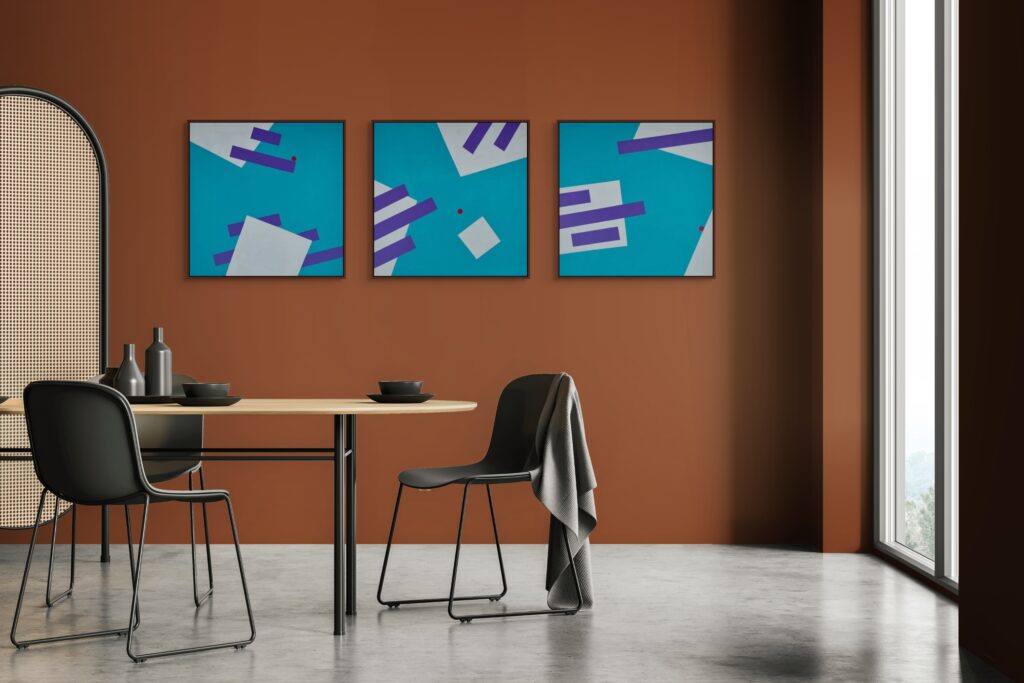
Final Thoughts: Keep Your Minimalist Art Intentional and Personal
Selecting art for a minimalist home is a thoughtful process, not a race. The most important guidelines are the ones you establish for yourself. Prioritise scale, allow each piece room to breathe with empty space, and use colour deliberately to enhance the overall atmosphere in artificial and natural light.
Above all, choose artwork that resonates with you – pieces that tell a story, evoke a memory, or simply bring you joy every time you see them. Minimalist interiors need not feel cold or impersonal. They should be a reflection of your personality and taste. Minimalist wall art is particularly well-suited for small spaces, where it helps avoid visual clutter and maintains a sense of openness.
By approaching your walls with intention, you can create a cohesive, serene environment where every piece feels purposeful. Art should also resonate with the mood of the room. Softer colours and gentle designs are especially effective in bedrooms. The result is a curated collection that enhances your space, making it both visually calm and deeply personal – a home that is truly yours.
Want to Choose Minimalist Art that Makes a Statement Without Clutter?
Transform Your Space with Uplifting Art
Browse my collection of mood-boosting geometric paintings.
FAQ - Frequently Asked Questions
- The Two-Thirds Rule – Artwork above a sofa, bed, or console should be roughly two-thirds the width of the furniture.
- The Eye-Level Rule – The centre of the artwork should sit at approximately 57–60 inches from the floor, aligning naturally with average eye level.
- Line Art – Simple, elegant, and expressive through minimal strokes.
- Geometric Abstracts – Clean shapes and limited palettes that add structure without clutter.
- Minimalist Photography – Uncluttered compositions, often monochromatic, that convey stillness and space.
- Monochromatic Art – Works using shades of a single colour, highlighting texture and form rather than complex colour schemes.

Unlocked. Congratulations!
Use code ADRA10 at checkout.
Only available the next 1 hour.
Your Discount for Mood-Boosting Art is Waiting
Enter your email to unlock your one-time discount.
By signing up, you’ll receive curated emails with early collection access and interior art styling tips. Unsubscribe anytime.