Why Invest in Original Geometric Paintings: A Guide for Collectors, Investors and Interior Designers
Table of Content
Introduction to Geometric Art
Geometric art is one of the most enduring forms of contemporary art, defined by its use of geometric forms such as circles, squares, triangles, and grids, to achieve balance and order. Its origins trace back to ancient civilizations, where geometric figures and patterns appeared in architecture, pottery, and textiles. Over time, artists have continually reinterpreted these forms across cultures and styles.
In the modern era, geometric art gained prominence through movements like Cubism, De Stijl, and Constructivism, later shaping contemporary geometric abstraction. Today, it remains a powerful visual language, using shape, colour, and line to create striking compositions that challenge perception and highlight its timeless appeal. The market for geometric art is thriving, with established artists and historical pieces commanding high prices.
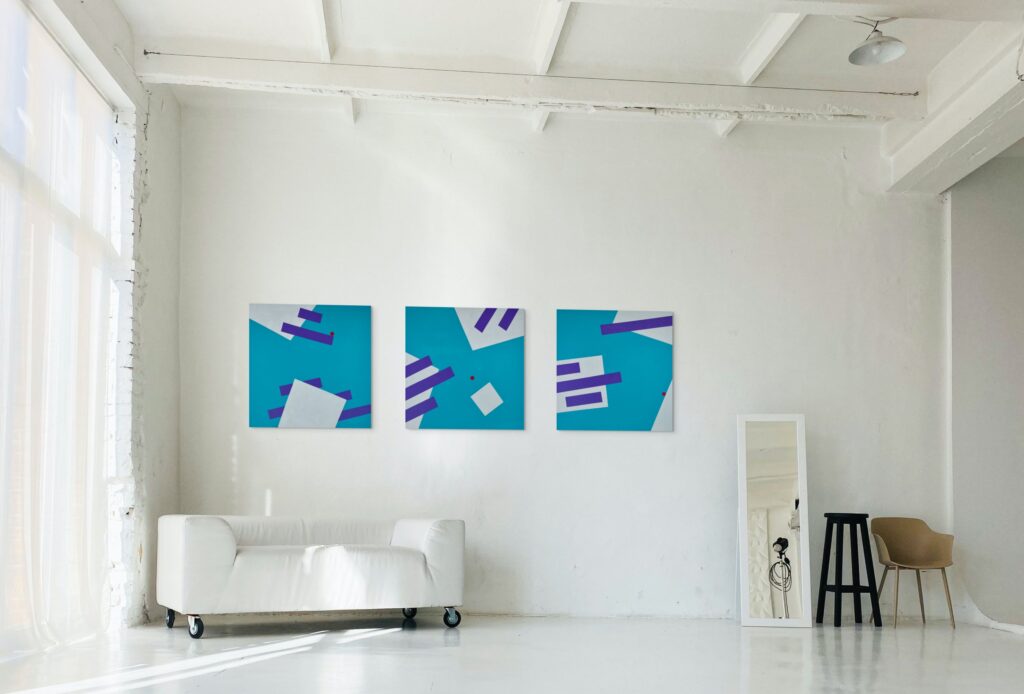
Why Original Geometric Paintings Deserve a Place in Your Collection
This article explores the value, history, and investment potential of original geometric paintings – one-of-a-kind geometric abstract works on canvas, wood, or paper, not mass-produced prints or digital files. This is essential for collectors seeking both aesthetic impact and lasting value.
Written for collectors, investors, and design enthusiasts, the guide explains why original geometric art is worth investing in, offering clear reasons, recent market insights, and practical advice for selecting pieces that provide daily enjoyment and long-term significance.
#1 The Aesthetic Power of Geometric Abstraction in Contemporary Spaces
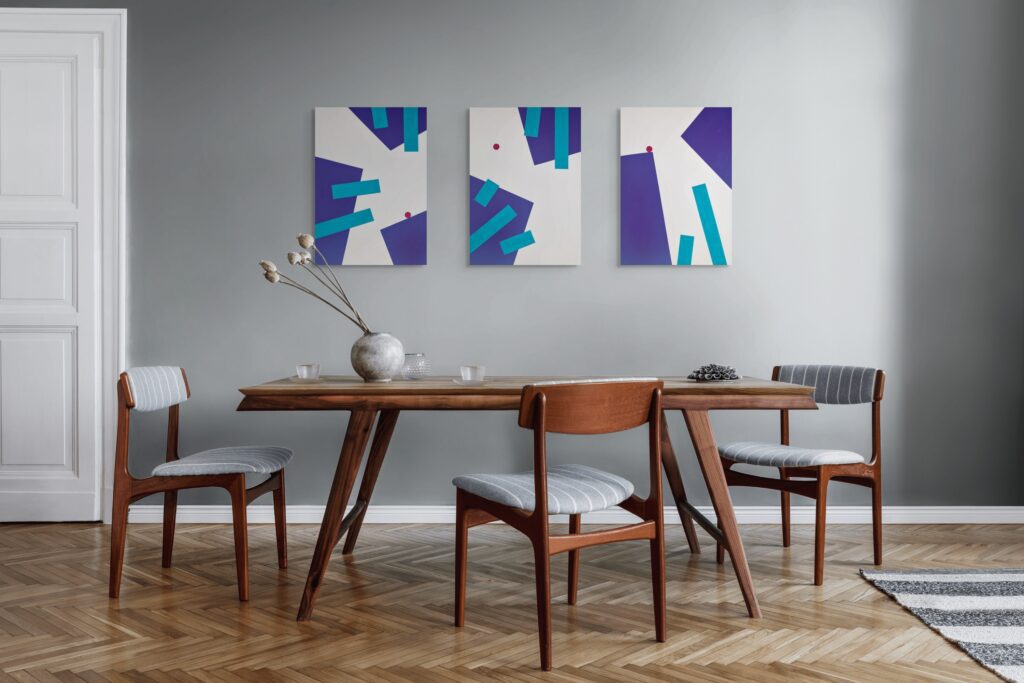
Geometric paintings bring clarity and energy to modern interiors. Their clean lines, symmetry, and bold colour blocks create balance while adding visual focus, transforming spaces like lofts, apartments, offices, and hospitality environments. Large-scale geometric prints or 3D modular sculptures can serve as bold centerpieces that anchor a room’s design.
Serving as striking focal points – above a sofa, along a hallway, or behind a desk. These works unify furniture, textiles, and architectural features into cohesive compositions.
Their universal visual language resonates across cultures, historical periods and design styles, from Scandinavian and Japandi to mid-century modern, industrial, and even classic interiors when colour palettes align thoughtfully with existing elements.
In 2026, there is a strong trend toward sensory rest in homes, where clean geometric lines help reduce visual noise.
#2 Understanding Geometric Patterns and Harmony
At the heart of geometric art lies a sophisticated understanding of geometric patterns, balanced proportions and their harmonious relationships. Fundamental geometric figures like circles, squares, triangles, and polygons serve as the essential building blocks for artists seeking to create order, rhythm, and balance within their work. By thoughtfully combining these geometric figures, artists can construct complex geometric forms that evoke a sense of unity and visual impact on human perception.
Geometric patterns have been embraced in architecture, textiles, and religious symbols throughout history. Native American art uses geometric patterns to reflect the interconnectedness of all living things. In Islamic art, geometric designs dominate as a response to the prohibition on depicting living beings, representing the infinite nature of God.
#3 Colour Strategies for Different Spaces
Thoughtful use of colour in geometric art can enhance the visual impact and set the tone of a room. Calming neutrals for relaxation areas, bold contrasts for workspaces, and harmonious palettes to unify diverse interior elements. See more in the table below, which pairs different space types with recommended colour approaches.
Space Type | Recommended Approach | Example Palette | Office / Workspace | Neutral compositions | Bold, high-contrast colours like whites, greys to enhance focus and productivity |
|---|---|---|
Creative studio | High-contrast colours | Cobalt, vermilion, neon yellow to boost creativity |
Bedroom / Retreat | Soft horizontal bands | Muted blues, warm taupes, soothing tones to promote relaxation |
Restaurant / Café | Dynamic diagonals | Vibrant, eye-catching combinations like rich burgundy, gold accents to energize and engage |
Children’s room | Playful primary colours | Bright reds, yellows, blues to elevate activity |
Geometric patterns can evoke everything from the intricate tessellations of islamic art to the optical illusions of 1960s Op Art exhibitions, making them remarkably adaptable to various styles while maintaining their sophisticated core identity.
#4 Leading Contemporary Artists in Geometric Abstraction
The history of geometric abstraction is closely tied to avant-garde movements of the early 20th century, such as Cubism and Constructivism. Geometric abstraction has been shaped by artists who push the boundaries of form, colour, and perception. Pioneers like Piet Mondrian, with his iconic use of primary colours and the precise grid, and Kazimir Malevich’s “Black Square” exemplify the movement’s roots in mathematical precision and spatial intelligence. Influential figures such as Bridget Riley, Victor Vasarely, Josef Albers, Ellsworth Kelly, and Kenneth Noland expanded these ideas, exploring bold colour fields, sharp edges, and minimalist compositions.
Their geometric art works, displayed in institutions like the Guggenheim Museum, provide key insights into art history and the evolving language of geometric abstraction, demonstrating clarity of form, intentional colour use, and the expressive potential of shapes. Geometric abstraction continues to thrive in contemporary art, influencing new generations of artists and movements.
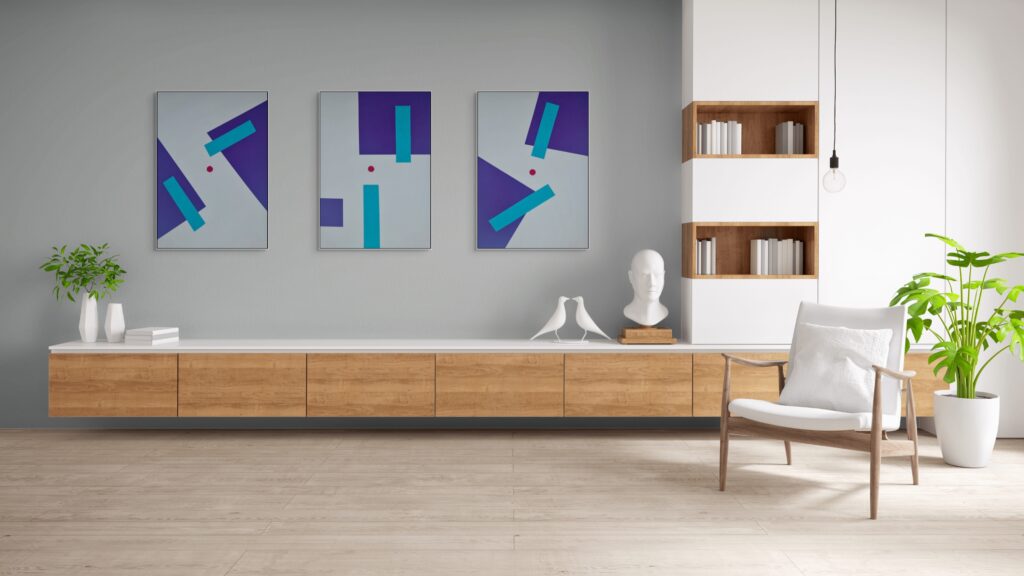
Key Characteristics: Why Invest in Original Geometric Paintings?
Original geometric pieces have limited supply, making them more valuable compared to mass-produced prints. An original geometric painting is a one-of-a-kind, hand-crafted artwork, valued for its unique materials, texture, and physical presence, qualities that distinguish it from reproductions and enhance its collectability.
#1 The Investment Appeal of Geometric Abstract Art
Investing in original geometric paintings offers several advantages:
- Scarcity and Uniqueness: Only one original exists, supporting value retention and appreciation.
- Potential Appreciation: As an artist’s reputation grows, so can the value of their original works.
- Emotional and Cultural Value: Original geometric art carries cultural significance and personal meaning, making it more than just a financial asset.
- Non-Correlation with Markets: Geometric abstract art is a non-correlated asset, meaning its value does not typically fluctuate with the stock or bond markets, offering portfolio diversification and potential as a safe haven asset.
- Tax Advantages: Purchasing original art can provide significant tax advantages if it’s for business purposes or donated to a museum.
Original paintings are durable assets that can serve as generational wealth, capable of being passed down as heirlooms. Historical data shows that high-quality art has demonstrated an average annual return of roughly 5.4%. This makes original geometric art a compelling option for portfolio diversification and long-term wealth preservation.
#2 The Emotional and Psychological Benefits of Geometric Abstraction
Recent psychological and neuroscience research confirms what collectors have long intuited: humans respond positively to balance, symmetry, colours, and repeating patterns. Geometric abstract art engages the mind through balance, symmetry, and order, qualities linked to feelings of calm, focus, and visual satisfaction. The clarity of geometric abstraction creates a contemplative experience, offering mental structure rather than emotional excess.
Geometric art has been a form of expression for centuries, captivating audiences across various cultures. Its use of geometric forms and patterns resonates beyond cultural boundaries, promoting cross-cultural understanding through universally recognizable forms.
Compared to more expressive abstract styles, geometric art provides a refined, disciplined aesthetic based on geometric principles that resonates with collectors who value precision and intention rather than emotional expression. The originality and exclusivity of these works deepen emotional connection and reinforce a sense of distinction, making original geometric art both visually rewarding and personally meaningful.
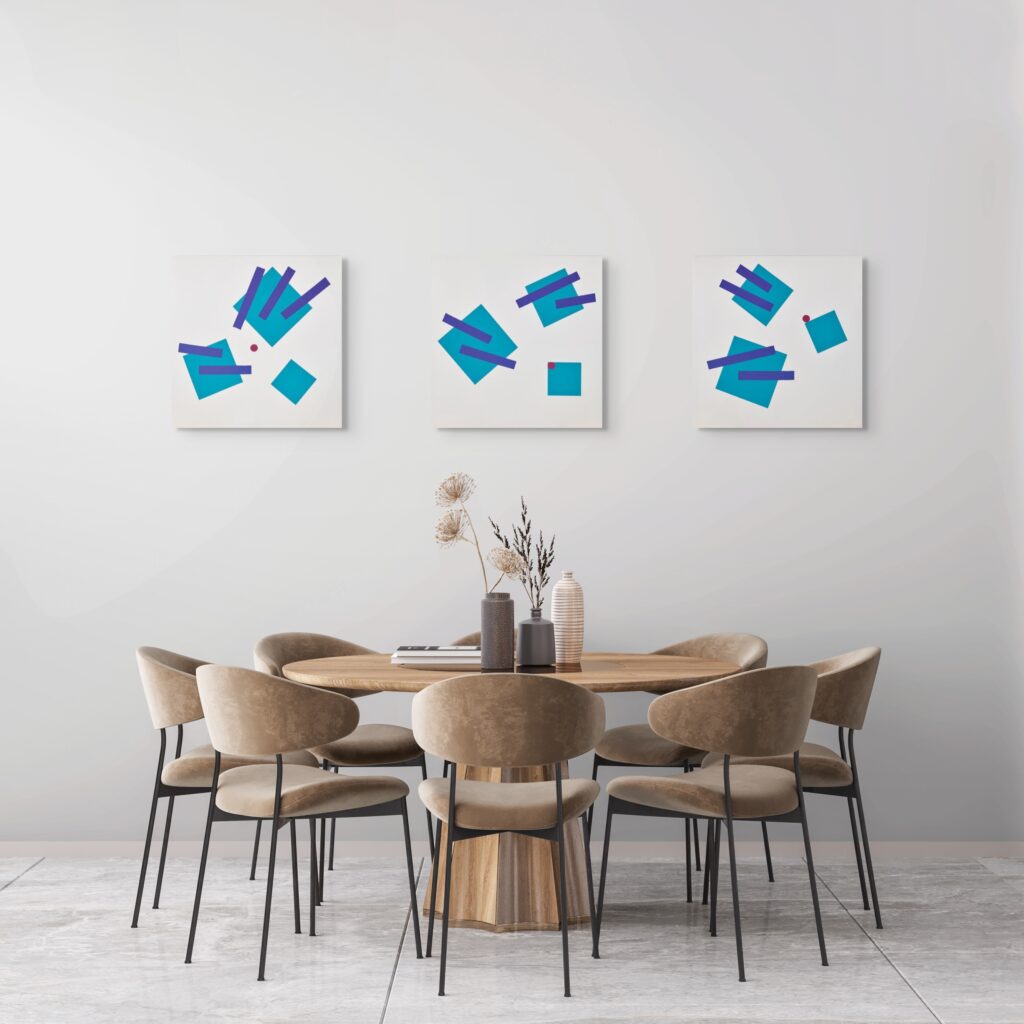
Financial Rationale: How Original Geometric Paintings Can Hold and Grow Value
While no art investment carries guarantees, original geometric paintings have shown steady demand in both primary markets (galleries, studios) and secondary markets (auctions) since the early 2000s. The style’s timeless visual principles age better than hyper-figurative, trend-based art tied closely to specific fashions or celebrity culture.
#1 Art as an Alternative Investment in 2026
The contemporary art market has evolved as investors seek tangible assets that provide both aesthetic enjoyment and portfolio diversification. Original paintings represent a fundamentally different asset class – one you can actually live with daily while it potentially appreciates.
The fundamental principle underlying art investment is straightforward: artworks seldom decrease in value when created by established artists. As artists gain visibility and develop stronger reputations, their prices tend to increase correspondingly. This creates opportunities for collectors who identify talented geometric abstract artists before their market recognition peaks.
#2 Performance vs. Traditional Assets
Recent auction data reveals striking trends in abstract art performance. In 2019, only one purely abstract artwork ranked among the top 15 most expensive works sold at auction. By 2020, six of the top 15 auction sales were completely abstract works. This shift indicates growing collector and investor interest that extends naturally to geometric abstraction.
Consider these concrete results from October 2020:
Artist | Work | Sale Price | Cy Twombly | Untitled (Bolsena) (1969) | $38.7 million |
|---|---|---|
Mark Rothko | Untitled (1967) | $31.3 million |
Barnett Newman | Onement V (1948) | $30.9 million |
Brice Marden | Complements (2004-07) | $30.9 million |
Clyfford Still | PH-144 (1947-Y-NO.1) | $28.7 million |
Gerhard Richter | Abstraktes Bild (649-2) (1987) | $27.6 million |
#3 Benefits as an Inflation Hedge
Physical artwork offers protection against currency devaluation that purely financial instruments cannot match. Unlike stocks or bonds, an original painting exists as a tangible object with inherent scarcity. There will only ever be one of each original work.
The 2023 art market demonstrated resilience and adaptability, balancing traditional appeal with emerging trends. Blue-chip artists – established names with substantial impact on the art world – tend to maintain or increase in value over time. Contemporary artists working in geometric abstraction benefit from this dynamic while often remaining more accessible to new collectors.
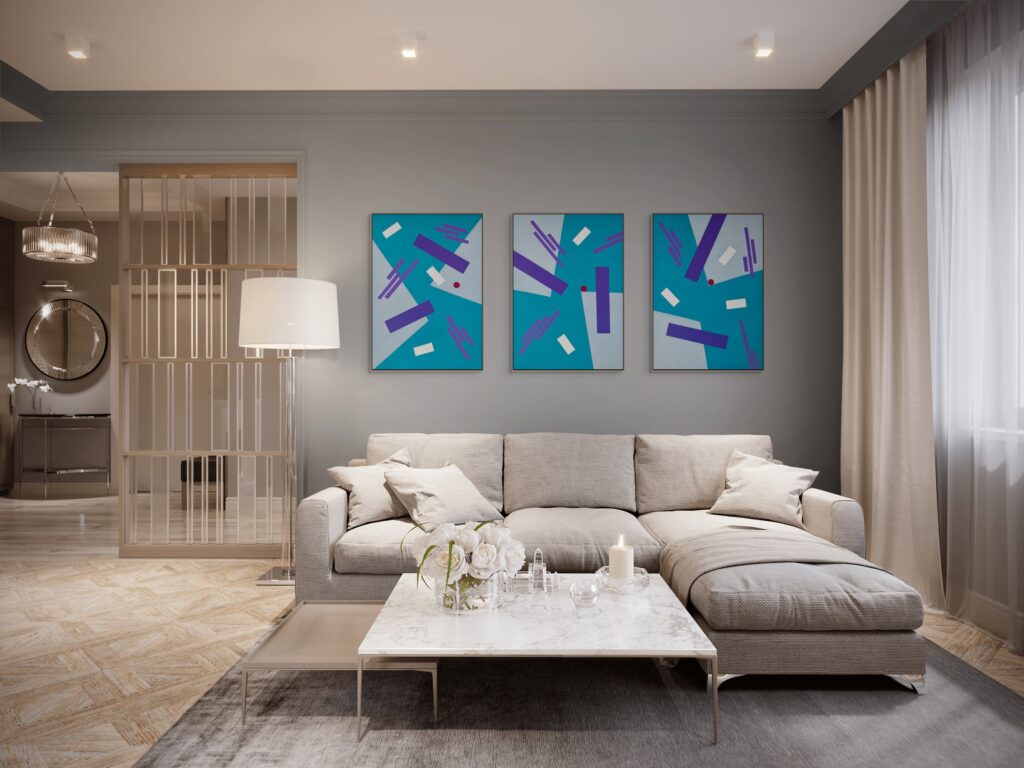
Uniqueness of Geometric Abstract Art That Can’t Be Replicated
Original geometric abstract art is inherently unique, with each piece defined by the artist’s hand, materials, and composition, making it impossible to replicate. This exclusivity not only enhances its aesthetic and emotional impact but also adds lasting value for collectors.
#1 Hand-Crafted Authenticity
An original geometric painting goes far beyond a mere reproduction. Up close, brushwork, layered pigments, and subtle imperfections reveal the artist’s hand and creative process. Texture and depth, whether thick and sculptural or thin and translucent, bring a presence and vitality that no photograph or print can replicate. Viewing original paintings can evoke up to 10 times more emotional response than viewing prints.
#2 The Artist’s Touch
Every original geometric painting bears the mark of its creator. Decisions about precise angles, colour mixing, and edge treatment are embedded in the work, reflecting hours of exploration and refinement.
Practical indicators of authenticity include:
- Artist’s signature (front or back)
- Date notation (e.g., “2022”)
- Title inscription
- Certificate of authenticity
Engaging with an artist’s process gives collectors a deeper understanding of each piece, turning ownership into an active, participatory experience – something impossible with mass-produced reproductions.
#3 Emotional and Cultural Value
The value of abstract geometry is inherently subjective, depending on factors including the artist’s reputation, medium, size, and complexity. This subjectivity is a strength: collectors not only enjoy a personal connection to the work every day but may also benefit from its potential appreciation over time.
Original geometric paintings carry cultural and historical weight that prints or digital art cannot match. Owning one means possessing a work that embodies over a century of exploration in mathematics, fundamental geometric shapes, and visual perception.
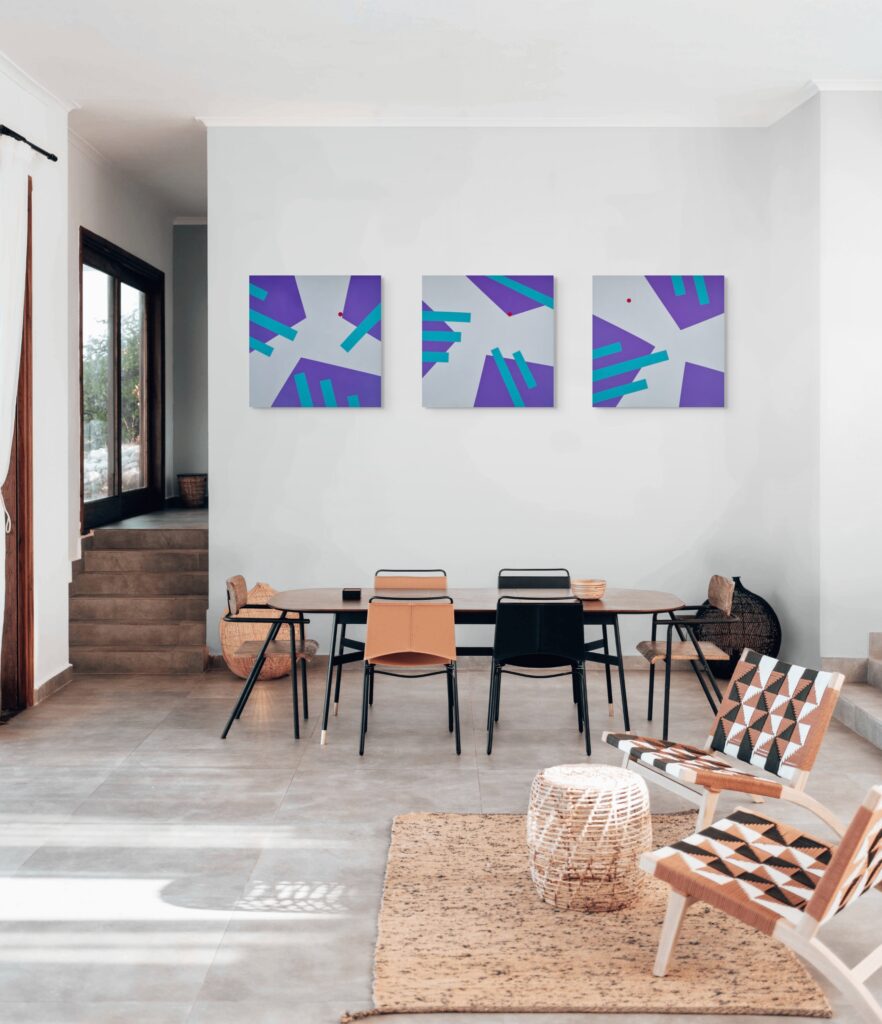
Market Demand for Geometric Art
Geometric art is experiencing growing demand, driven by shifting collector demographics, interior design trends, and global market growth.
#1 Generational Shifts in Collecting
Younger collectors bring new sensibilities to the art world. Millennials and Gen Z often favor modern art with clean, straight lines, geometric patterns, and digitally inspired design (algorithmic design and parametric design), which feel familiar and engaging.
This shift drives sustained demand for geometric art that bridges historical abstraction with contemporary aesthetics, attracting audiences accustomed to digital and visually sophisticated media.
#2 Interior Design Trends Driving Demand
Geometric art is increasingly featured in design publications and on social media as a key element of striking interiors. Its compatibility with popular styles – minimalism, Japandi, and mid-century modern – ensures lasting appeal.
Designers favor geometric compositions for their principles, creating abstract art that remains not only visually stunning but relevant across multiple redecoration cycles.
#3 Growth in the Global Art Market
The global art market continues expanding, with new collectors emerging across Asia, the Middle East, and Latin America. Geometric abstraction’s universal visual language rooted in simple forms and mathematical forms rather than culturally specific imagery travels effectively across borders.
Contemporary artists working in geometric traditions include Sarah Morris, Matteo Nasini, Helen Miranda Wilson, and Ricardo Mazal. These artists reimagine concepts from Vasarely’s optical art traditions with modern interpretations, using chromatic juxtaposition of geometric shapes to create powerful optical effects that resonate with international audiences.
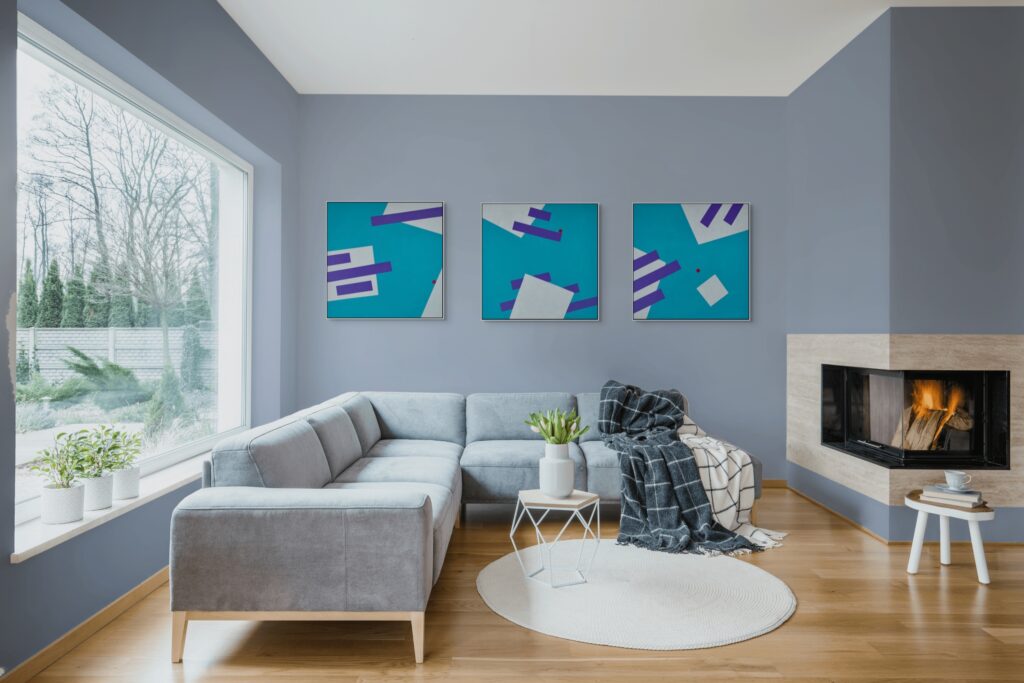
How to Evaluate Original Geometric Paintings
Evaluating an original geometric painting involves studying the artist and assessing the work’s technical quality.
#1 Researching Artists
Not every geometric painting has the same depth. Focus on the artist’s background, experience, and distinctive style – their biography, recognition, and the way they use geometric shapes, ratios, and patterns. Strong works come from artists who demonstrate sustained engagement with geometric principles across multiple bodies of work.
#2 Assessing Technical Quality
Physical examination reveals craftsmanship that photographs may obscure. When evaluating an original geometric painting:
Inspect precision and control:
- Examine corners, edges, and line junctions closely
- Check whether paint layers are even and well-finished
- Look for intentional versus accidental imperfections
Evaluate compositional elements:
- Assess use of negative space – is it purposeful or neglected? Master geometric abstractionists understand that negative space is as important as the shapes themselves.
- Consider colour relationships – do they create visual harmony or discord?
- Determine whether the composition conveys balance or purposeful tension
- The golden ratio appears frequently in quality geometric pieces, creating naturally pleasing arrangements.
Examine physical construction:
- Turn the work around to check canvas build quality
- Assess stretcher bar construction and tension
- Verify that materials suggest archival quality (cotton, linen canvas)
Context matters significantly. Inclusion in curated exhibitions about abstraction, features in design magazines, or presence in respected online galleries all indicate serious artistic practice.
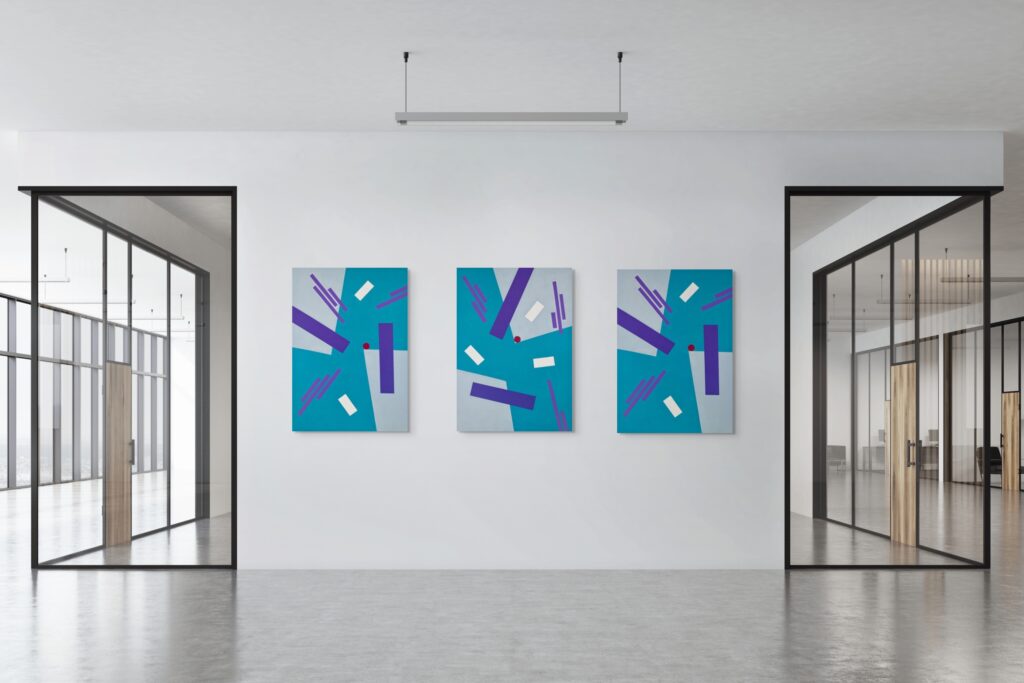
Making Your First Investment
Investing in original geometric art can be exciting but requires careful planning, especially for first-time collectors. Understanding your budget, the type of artists to focus on, and where to buy are all essential steps in making a confident and rewarding purchase.
#1 Budget Considerations
Before purchasing, it’s important to establish a clear budget. Original geometric paintings can vary widely in price, depending on the artist’s reputation, the size and complexity of the piece, and its market demand. Setting a realistic spending range helps narrow your options and ensures you make a purchase that aligns with your financial goals. Remember, investing in geometric abstract art isn’t just about the monetary value – it’s also about acquiring a piece that resonates with you personally.
Entry-level guidance:
Category | Price Range | What to Expect | Emerging artists | $300–$1,500 | Small works, early career |
|---|---|---|
Established regional artists | $1,500–$5,000 | Mid-sized canvases, solid exhibition records |
Recognized names | $5,000–$25,000 | Complex compositions, gallery representation |
Blue-chip artists | $25,000+ | Museum-quality work, auction track records |
Buyers need not wait for an artist to die for paintings to increase in value – this is a common and unfortunate myth. Living artists with established track records produce works that appreciate significantly when market conditions align.
#2 Emerging vs. Established Artists
Deciding whether to invest in an emerging or established artist can significantly affect both the cost and potential return of your investment. Established artists usually have a proven track record and higher market value, offering a degree of security. Emerging artists, however, can provide exciting opportunities for growth, often with more affordable entry points. Assessing an artist’s portfolio, exhibition history, and critical reception can guide you in choosing the right balance between risk and potential reward.
Each approach carries distinct advantages:
Emerging artists offer:
- Lower entry costs
- Discovery potential
- Greater possible upside
- Opportunity to build relationships with creators
Established artists provide:
- Track records demonstrating market acceptance
- Stability and predictability
- Easier authentication and provenance
- Institutional recognition
A balanced collection might include one or two works connected to recognized lineages, complemented by several originals from promising younger geometric painters. Focus on genuine connection to the work rather than pure speculation.
Explore original geometric paintings that combine artistic integrity with long-term value. Works like Playtime Triptych illustrate how hand-crafted geometric compositions with 3D layered textures offer both visual impact and collectability, making them compelling choices for collectors, investors, and design professionals.

Playtime: Energetic
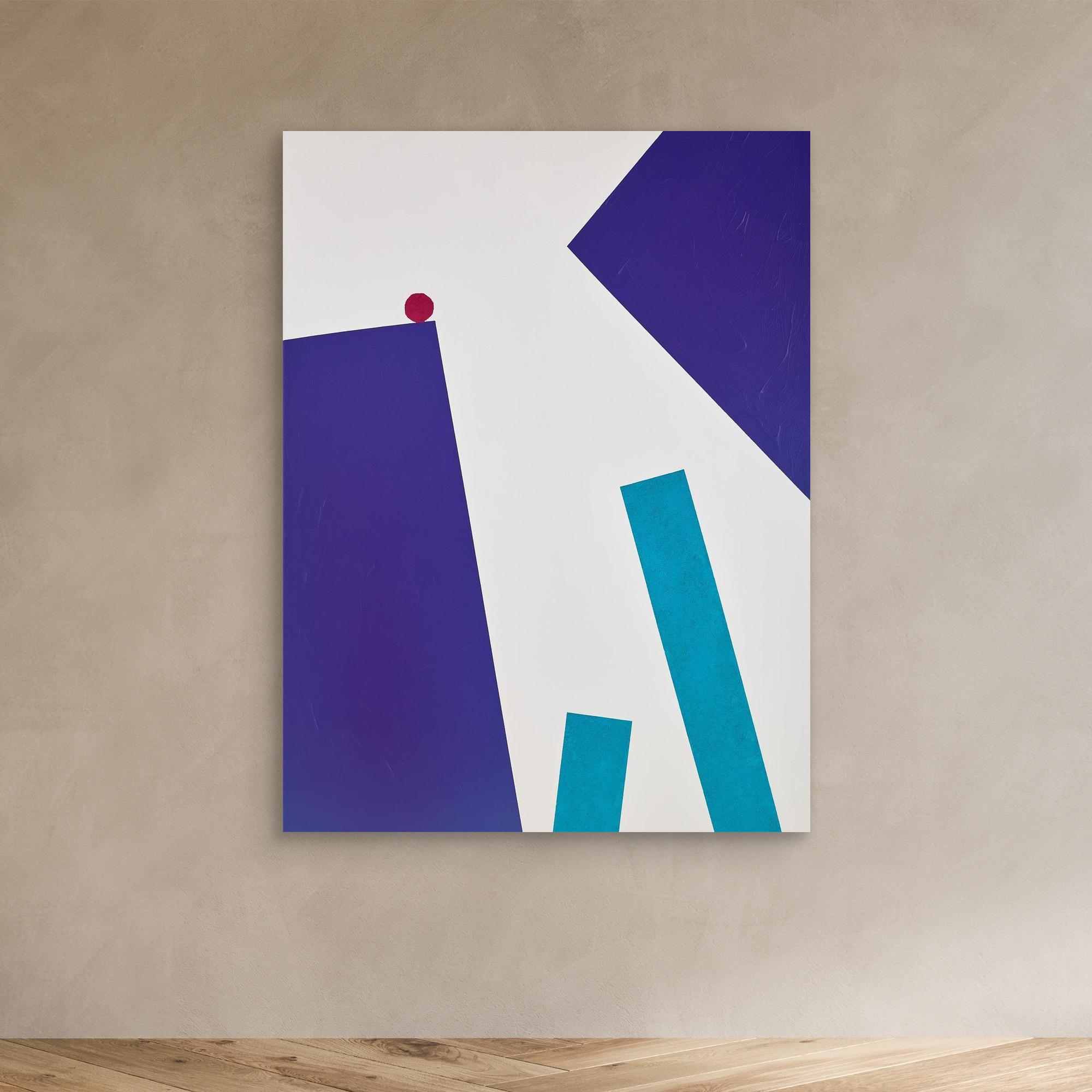
Playtime: Bouncy

Playtime: Adventure
#3 Where to Buy Original Geometric Art
Finding reputable sources is key to a successful first investment. Galleries, art fairs, and online platforms specializing in original works are great places to start. For emerging artists, local exhibitions or studio visits can provide unique opportunities to purchase directly from the creator, sometimes at a lower price point. Always ensure that provenance and authenticity are verified, and don’t hesitate to ask questions about the artist’s background and the painting’s history.
Three primary channels serve collectors:
- Local galleries offer curated exhibitions with in-person viewing opportunities. You can assess scale, colour, and texture directly while receiving expert guidance.
- Online platforms provide filters for style, size, and price across global inventory. Request high-resolution detail shots and certificates before purchasing. Online platforms have made the art world more accessible, allowing artists from diverse backgrounds to present their work to a global audience. They provide artists with both exposure and direct feedback via reviews and social media interaction. The online marketplace allows artists to retain more control over their work.
- Direct artist commissions create opportunities for customized work. Purchasing original art directly supports artists, enabling them to continue creating. Studio visits or online communication allow discussion of materials, dimensions, and colour preferences. Purchasing geometric art online allows buyers to support artists directly from around the world.
Regardless of channel, verify return policies, confirm shipping includes insurance, and understand customs implications for international purchases.
🖼️ Art & Investment Knowledge Quiz
Test your understanding of original geometric art.
Question 1 of 3
What is one of the main advantages of owning an original geometric painting?
How does geometric abstract art typically affect an interior space?
Why do many collectors consider original art meaningful beyond decoration?
Conclusion: Original Geometric Paintings as Enduring Investments in Beauty and Meaning
Original geometric paintings represent a rare convergence of aesthetic impact, geometric exploration depth, emotional benefit, and potential financial resilience. From Malevich’s “Black Square” revolutionary manifest to today’s contemporary artists reimagining geometric traditions, this artistic journey spans more than a century of continuous creative evolution.
Buying an original geometric abstract art piece means owning a singular object that carries the artist’s hand, process, and ideas. The texture of paint, the precision of edges, the subtle variations in colour, these elements exist in one place only. No reproduction captures what you experience standing before an original in natural light.
Consider beginning with one thoughtfully chosen piece for a key room in your home or office. Live with it. Notice how it changes throughout the day as light shifts. Observe which visitors respond and how. Then, as your sense of the field develops, gradually build a focused collection over several years.
Investing in geometric abstract art invites you to participate in an ongoing exploration of form and order while shaping spaces that genuinely reflect your sensibility. Whether you’re drawn to the calm of precise compositions or the energy of complex compositions featuring unexpected ways of combining mathematical forms, the world of geometric art offers endless possibilities for discovery.
Are You Ready to Invest in Art that Defines Your Space?
Transform Your Space with Uplifting Art
Browse my collection of mood-boosting geometric paintings.
